


Menu
By theme
By theme


{{ variable.name }} : {{ variable.values[selectedVariantsIndex[variable_index]].name }}
Quantity:
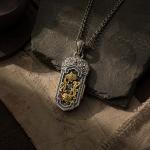
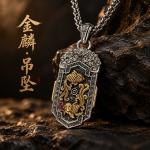
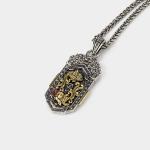
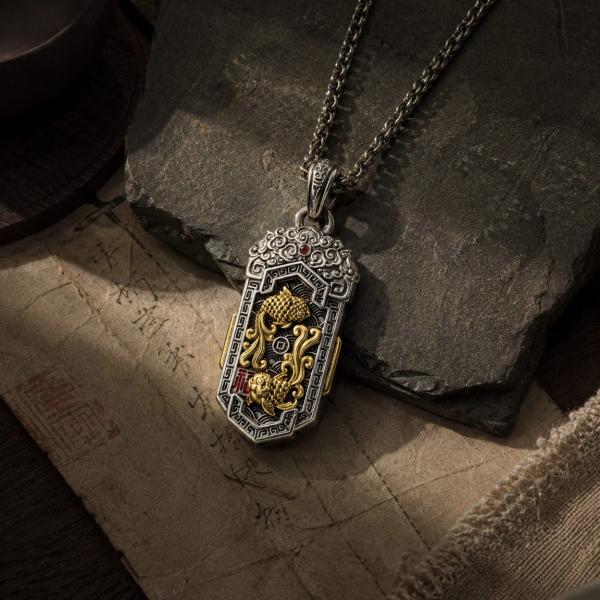
The fish is shown side-on, scales overlapping from the dorsal ridge down to the belly line. This arrangement is not decoration; it follows the anatomy of a real fish, each scale overlapping the one behind, denser toward the tail. On the pendant the scales are cut with a shallow blade, only three sides raised on each, and the direction of the light does the layering. From a distance it is one fish; up close you can count how many scales there are. The tail lifts and the root narrows, and the weight of the whole fish sits at the pelvic fins, which is what makes it hang steadily.
The tale of the carp turning into a dragon is told most fully in the Records of the Three Qin. It records that where the Longmen mountain breaks, the Yellow River runs through, and every late spring yellow carp come from the sea and the other rivers; in a single year no more than seventy-two pass the gate, and after passing, heavenly fire burns their tails from behind and they become dragons. The passage is often shortened to the carp leaping the dragon gate, dropping the number seventy-two, though that number is the point: it is hard, and therefore rare. Longmen lies between Hejin in Shanxi and Hancheng in Shaanxi, once within the Hedong region, and the place names in the text still match the map.
The name golden scales refers to the colour of the scales, not to a gilded fish. In practice only the raised faces of the scales are polished bright while the grooves are left dark, and the contrast lifts them out. The tail is made thin, split into two lobes with the edges curled slightly, so it moves in a breeze. The mouth is rounded, the eye a single dot with no pupil; make it larger and you get a dead fish eye. The number of scale rows follows the length of the body, and as the tail narrows the scales shrink with it.
Dust hides in the grooves between scales. Brush them dry with a soft brush along the run of the scales, not back and forth across them. Wipe the copper dry after it touches water, especially the two thin tail lobes, where water collects and green spots start. Store it flat so the tail carries no weight; that is the point least able to take pressure. White copper darkens with sweat, and darkened scales look more like old copper work, so there is no need to hurry it bright.
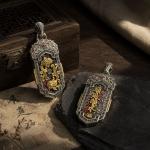
The pendant and the necklace differ in the fittings. The single pendant is for anyone who already has a cord, threaded head up, which carries the sense of leaping upward. The necklace version comes complete, threaded the same way. Head up is the old practice; head down turns it into a fish lying flat and reverses the meaning entirely. The fish is shown in profile, so it will turn slightly when worn at the chest, which is normal for a single-sided relief pendant rather than a fault. A finer chain keeps the fish from looking heavy.