


Menu
By theme
By theme


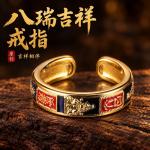

{{ variable.name }} : {{ variable.values[selectedVariantsIndex[variable_index]].name }}
Quantity:
The eight auspicious symbols came in from Tibet. They entered the Central Plains with Lamaist objects and textiles in the Yuan dynasty, took root on porcelain, brocade and metalwork through the Ming and Qing, and became a familiar auspicious pattern. Each of the eight has its own meaning; set together they form a complete blessing, and taken singly each still stands on its own. Craftsmen in the Han regions adapted them for flat layout, so eight in a row works and so does eight in a circle.
The eight are the parasol, the golden fish, the treasure vase, the lotus, the right-turning conch, the endless knot, the victory banner and the wheel. The order varies slightly from region to region; Tibet calls them the eight auspicious signs and the Han regions mostly the eight auspicious symbols. The parasol gives shelter, the fish move freely, the vase gathers wealth, the lotus is pure, the conch carries sound, the knot has no end, the banner brings victory, the wheel turns without stopping. These readings match the pattern traditions on both sides of the divide, and none of them was made up on the spot. The victory banner is a standard of the military kind; the turning wheel means the lineage of the teaching never breaks.
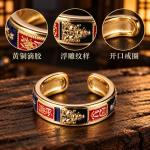
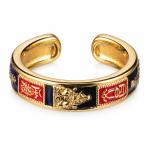
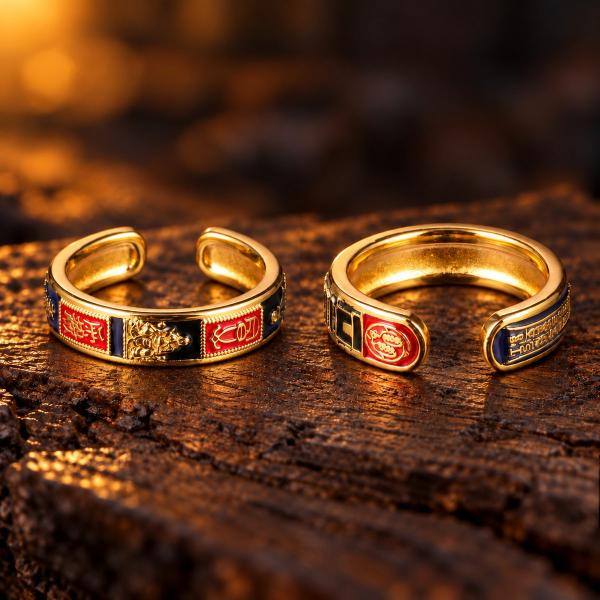
The ring sets the eight around one band, the face divided into eight panels with one symbol in each. The panels must be even; squeeze one and the eye notices the awkwardness at once. The pattern is pressed shallow, since a deep cut catches the hand and holds dirt. White copper is ductile and takes this fine, close pattern without cracking, and against harder metals eight panels is steadier work. The panel borders are separated by a thin line; once that line breaks, two symbols run together into a blur.
In the eight panels the crevices blacken first, and a dry toothbrush works better than a wet wipe. When the copper goes dull, put copper polish on a soft cloth and work in one direction rather than back and forth across the pattern, which flattens it. Take the ring off for washing hands and dishes; detergent is unkind to the colour. Make sure it is dry before it goes into a pouch, since trapped damp brings out spots. The pattern is shallow, so skip toothpaste: the grit is coarse and rounds the border lines within a few goes.
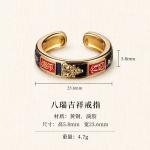
The band is closed, so the size has to be right. White copper does not spring back much and resizing damages the pattern, so it is best to get it right the first time. For thicker knuckles, leave a little room at the base of the finger, or it will jam on the joint. A wide face makes the hand look smaller, which suits slim hands, while fuller hands should take a narrower version so it does not feel cramped. White copper runs cool: it does not jump against dark clothing and holds its own against pale, which makes it easier to pair than gold.