


Menu
By theme
By theme


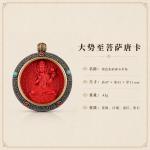
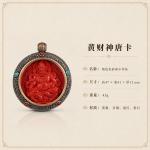
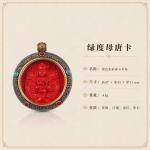
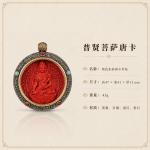
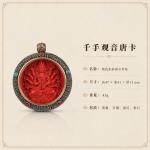
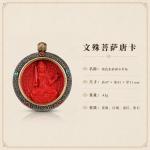
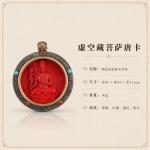
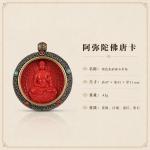
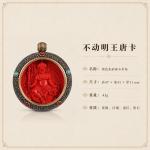
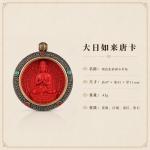
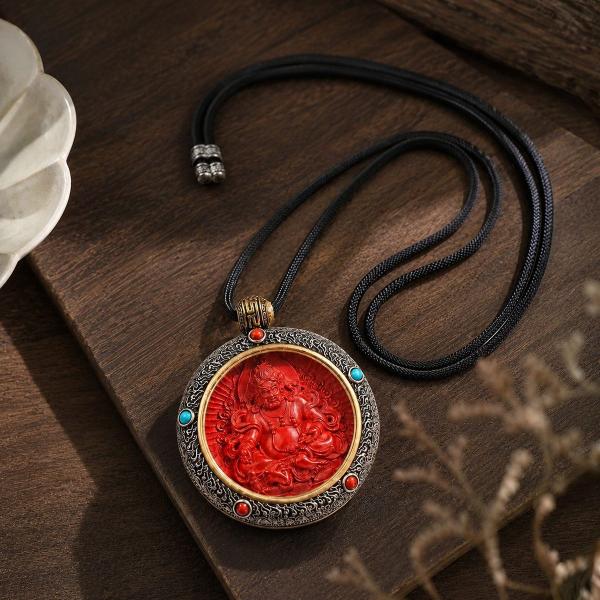
{{ variable.name }} : {{ variable.values[selectedVariantsIndex[variable_index]].name }}
Quantity:
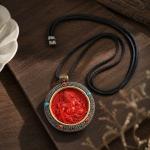
Open the lid and the painting inside is the whole point. A thangka is a Tibetan scroll painting on cloth, worked mostly in mineral pigment: cinnabar, azurite, malachite, gold powder, all ground extremely fine and laid on in layer after layer. That is why the colour sits so deep and does not glare back at you. A small thangka fitted into a gau box is a painting folded up and carried on the body, and the practice is a common one in Tibet.
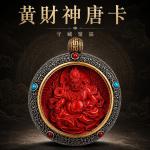
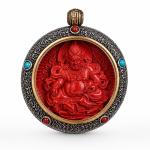
Of the six subjects, Amitabha is red, hands in the meditation gesture, holding a bowl. Manjushri rides a lion with a sword raised in the right hand and a lotus holding a scripture in the left. Akashagarbha has a blue body, a sword in the right hand and a lotus with a jewel in the left. Samantabhadra rides an elephant, commonly the six-tusked white one. Green Tara has a green body, the right hand in the granting gesture, the left holding a utpala. Yellow Jambhala has a yellow body, the jewel in the right hand, the mongoose in the left. Recognise the mount and the objects in the hands first. Those are the hardest to confuse.
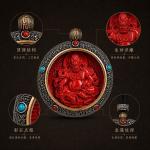
At this size the face is no larger than a fingernail, and the painter keeps a brush with only a few hairs left in it to draw the brows and eyes. So the value of a small painting is not in the word fine. It is in proportion. The three heights of head halo, body halo and lotus seat have to be even, and the brows and eyes have to sit on one horizontal line. Once they are off, the face stops being a face. Hold the lid square in front of you and close one eye; whether the features are centred shows at once. The robe lines should run smoothly too, and looked at against their direction, a furry edge means the image was printed rather than painted.
The white copper body and the painting inside it are two separate problems. The box minds knocks and the painting minds damp. In a southern plum-rain season, do not leave the box in a drawer for weeks on end. Wooden drawers hold moisture, and once the temperature shifts, a film of mist forms on the inner pane. A small packet of desiccant can sit nearby, though not touching the painting. Before closing the lid, let the air inside settle instead of snapping it shut. The gold lines are the last thing that should be touched, because a fingerprint on them will not come off.
Which of the six to choose depends on who you want to look at every day. Amitabha is formal. Green Tara is soft. Yellow Jambhala is lively. Manjushri and Akashagarbha run cool, and Samantabhadra is steady. If you genuinely cannot decide, take the face that pleases you most. Painted at this size, the face is the only thing that can still move you daily.