


Menu
By theme
By theme



{{ variable.name }} : {{ variable.values[selectedVariantsIndex[variable_index]].name }}
Quantity:
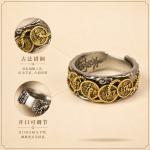
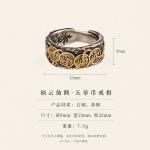
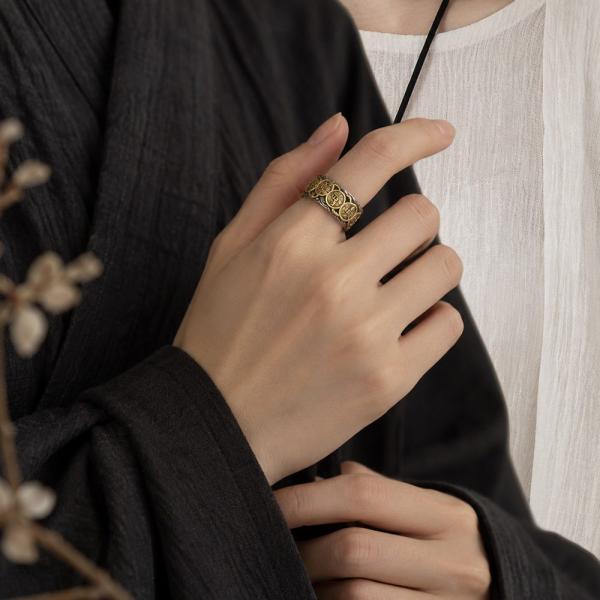
The face is round with a rim raised around the edge, like the outer ring of an old coin. The rim is not decoration; it is there to hold the pattern in, and without it the clouds would drift off the edge and scatter. The rim stands only a hair above the pattern, so it feels like a step under the finger and does not dig in. A round face takes up a fair amount of room on the finger, which is worth expecting. Were the face smaller, the pattern would have to be reduced: half a crane, and only a few clouds.
In Ming and Qing dress regulations the crane ranked first. On the rank badges of civil officials, the first rank used the crane, the second the golden pheasant, the third the peacock, and so on down the list. So the crane carried weight on objects of the period: officials' households used it, and the meaning was plain to see. The bird is easy to recognize as well: long neck, long legs, a patch of red on the crown, and with the wings folded the feathers line up along the back. Badge designs followed set forms, with the bird's pose and the placing of the clouds prescribed rather than drawn at random.
Clouds with a crane is the old pairing of the crane among clouds, which suggests distance and height. The cloud heads are ruyi-shaped, one pressing on another, drawn in from the rim and stopping at the crane's feet. The name imperial coin refers to the shape of money: a round rim, a pattern on the face, a line at the edge, modelled on old coins without pointing to any one dynasty. That should be said plainly, so that nobody takes it for an ancient coin. The cloud heads sit under the crane's wing without hiding the feathers, and that is the concession the composition makes.
Dust collects in the cloud grooves, especially under the crane's wing where a brush cannot reach, so use a cotton swab dipped in water and turn it slowly. When the copper dulls, wipe the raised faces and leave the hollows. Worn through to the base, the gold version shows the copper underneath as a pale yellow line that cannot be wiped off. Take the ring off when washing your hands; soap left in the crevices turns green over time. The crane's feathers are laid line by line with gaps too narrow for a swab, so dry brushing is the only way, and soaking the whole ring before brushing is easier than rubbing at it dry.
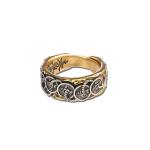
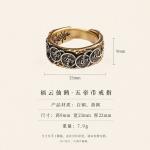
Two colours, gold and silver, the pattern identical and the difference in the surface. Gold is warmer, and the red on the crane's crown holds up against it; silver is cooler, and the cloud layers read more clearly. For shorter fingers, choose silver, which looks lighter. Closed band, so the size must be right: resizing white copper damages the line along the rim, and once that line breaks the whole face comes apart. Neither colour is artificially aged; the colour sits over the surface and at the corners will wear away as a faint layer.