


Menu
By theme
By theme




{{ variable.name }} : {{ variable.values[selectedVariantsIndex[variable_index]].name }}
Quantity:
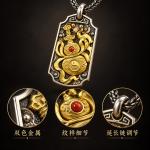
On a small piece, the finish at the waist is what you look at. The waist of a gourd is its thinnest point, and that is where the mould is most likely to run short. A gap that cannot be filled leaves a notch, and a filled one shows a patch of different colour. This waist is solid, symmetrical on both sides, and a fingernail pressed into it finds no soft spot. The nodes of the vine are rounded, so it will not snag thread. The base is flat and the piece sits steady on a table; turned over, the sprue mark has been ground clean, and that detail tells you how much care went into the stages after casting.
A gourd has a small mouth and a wide belly, and it holds what is put inside, a shape that folk use has leaned on for a long time. The idea of a sword-nurturing gourd turns up mostly in novels and in the mouths of storytellers, in tales of a sword kept and fed inside a gourd and slapped out when needed. Take that as a story. On a pendant, what is borrowed is the image of something that can be contained, not a claim that anything goes inside, and there is no reason to be literal about it.
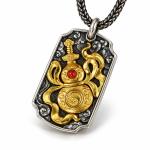
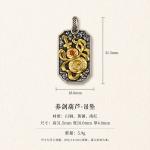
This gourd lies on its side. The vine runs out from the stem, follows the belly around in a single loop, and the leaves turn over on either flank. The auspicious pattern is not packed in tight; a stretch of plain surface is left at the waist to separate top from bottom. The cool tone of white copper suits that open arrangement. Crowd the pattern and the metal goes dull; leave one clear space and the whole plaque begins to breathe. The rim is made thick so it does not cut the hand, and the cord hole is opened where the vine ends.
The two options differ by one chain. Choose the pendant alone if you plan to use your own cord or a leather thong; a dark cord holds this gourd in better. Choose the version with a chain if you would rather not match anything: it is a fine Chopin link, and the small clasp passes the hole without a struggle. A slender neck suits the chain, with the pendant riding lower. A thicker neck, or a preference for sitting close, is easier with a cord, since the knot can be moved along.
White copper begins to shift colour after a fortnight, yellow first and then darker, and the belly where fingers rest stays the brightest. That brightness is not the finish rubbing off; it is polish from handling. To slow it down, skip perfume on the way out and run a dry cloth over the piece when you come home. Dust in the crevices comes out with a soft brush used dry. Do not soak it. Once soaked and left to dry, water marks settle into the hollows and look bad. If it is genuinely dirty, a cotton bud with a touch of clean water dabs it away, and that is enough.