


Menu
By theme
By theme




{{ variable.name }} : {{ variable.values[selectedVariantsIndex[variable_index]].name }}
Quantity:
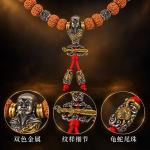
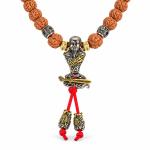
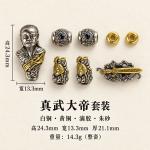
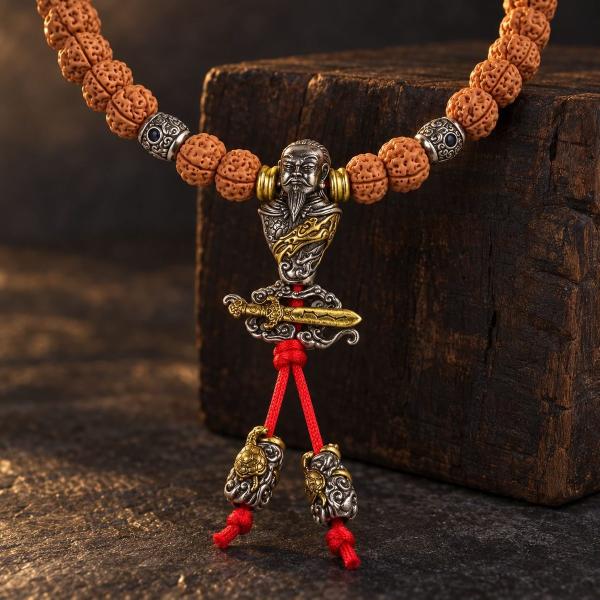
A figure cut into a three-hole bead (guru bead) is a different problem from one cut into a square plaque. The face of the bead offers only a small patch of ground, and the figure has to shrink to the smallest size at which it is still recognisable: the crown, the hair and the robe kept as three horizontal bands, the sword in the hand reduced to a single diagonal, the turtle and snake underfoot pressed into one mass. The channel crosses from side to side behind the figure's shoulders, so the front stays whole and is not cut in two by a hole.
Zhenwu, the Perfected Warrior, is the deity of the north in Daoism, also called Xuantian Shangdi. His images generally show him with loose hair, in dark robes, standing on a turtle and a snake. The two creatures stand for the water virtue of the north, a pairing fixed from the Song dynasty onward, and temple images follow that pattern almost without exception. Setting him beside a fu character is a folk move: the deity guards, the character carries the good wish, and both are served without either getting in the other's way.
The hole position is the making or breaking of a three-hole bead. Set too high, the pendant tips forward when strung. Set too low, the beads cover half the figure. Here the holes sit a little below the shoulder line, symmetrical on both sides, so the front faces outward once strung and does not spin on its own. The mouths are flared, enough for the knot to disappear inside, and no thread end shows from the outside. That is a considered detail in a component of this kind, and it costs an extra stage of work.
The fu character is cut on the back, small, taking up a third of the surface. It is written in regular script with thick strokes filled with a dark tone, so the back is plain where the front is modelled, and it only appears when the piece is turned over. Some people would rather have the character on the front. Following older pieces, the back is the better place: the front is left to the figure, and the back sits against the body with the character turned inward, known only to the wearer. That arrangement is common on old work. The point is not display but a private reckoning, and it also keeps the character from rubbing against clothing.
A white copper three-hole bead needs to age along with the beads around it. Freshly strung, the metal is bright; after a fortnight it begins to dim, and within a year it settles into the same key as old beads. Do not try to hurry it along by rubbing it with sweat from your hands, which only leaves it mottled. When stringing, put a soft spacer on either side of the metal part, which guards against wear and against rattling. If the cord loosens, tighten it rather than letting the bead rock among the others. Rocking wears the hole wider over time, and once it is wide there is no remedy.