


Menu
By theme
By theme




{{ variable.name }} : {{ variable.values[selectedVariantsIndex[variable_index]].name }}
Quantity:
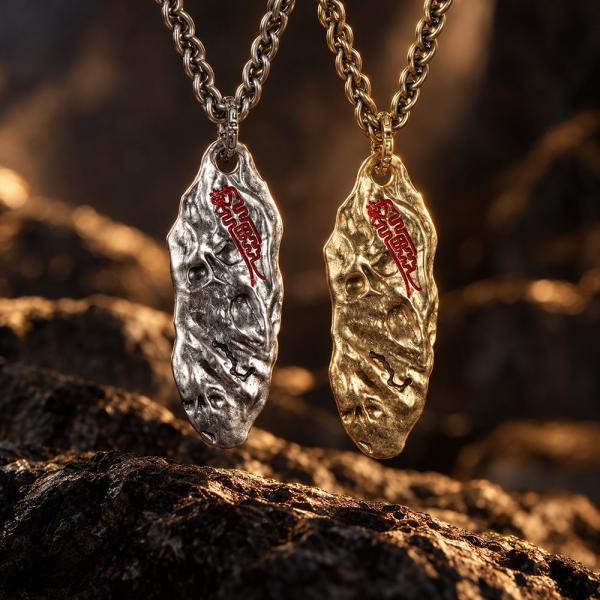
This series is called Dao Gui, and it takes the uncanny path rather than offering auspicious phrases. The four characters of the piece name describe a stone split by a crack with something sealed inside, held there by talismans or a chain. The subject has no traceable source; it is a phrasing that has grown up within this style in recent years. Those who like it want that unsettled charge, and those who do not find it unlucky. Each to their own. Other subjects in the series follow the same look.
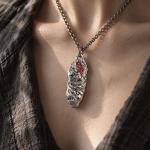
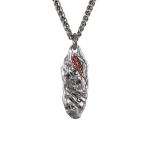
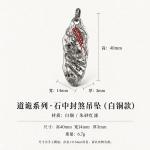
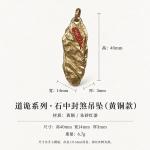
The plaque is cut as an irregular stone shape, its edges chipped and broken rather than drawn to a proper circle or square. The crack sits below centre, and inside it a coiled mass of line can be seen: the sealed force, drawn as line gathered very tight. A chain wraps the stone, link over link, crossing the crack and closing at the top of the plaque, where the hole for the cord is.
Gold and silver are two surface finishes, both on a white copper body. The antiquing is heavy, the recesses nearly black, the raised edges of the stone polished bright. That contrast of black and light is what gives the stone its volume. The antiqued layer does not take rubbing: put a silver cloth to it and the black comes away into a flat grey, and the stone goes flat with it. The dark areas here have depth rather than a thin stain. The silver version's darks lean grey and the gold version's lean brown, which you can see when the two are side by side.
Most people who buy this are men, pairing it with a black cord or a dark brown leather one, the pendant resting on the chest. The irregular stone shape is the point of it. A chain works too, but choose a heavier one; a fine chain under a chipped stone looks top-light. With black clothing the cool tone of the silver sits better. With earth colours such as brown or olive, the gold is more comfortable and looks more like an old object.
With an antiqued piece, the less you handle it the better. Oil from the hands dulls the bright edges first and then works into the recesses, and over time the dark areas go tacky. A press with a dry cloth after wearing is enough. Do not rinse it; water works into the chipped crevices and dries to leave pale marks. If it truly needs cleaning, dab the soiled spot with a cotton bud carrying the least water, and blot it dry at once. Store it in its own bag, since contact with other copper pieces will knock the bright edges about.