


Menu
By theme
By theme

{{ variable.name }} : {{ variable.values[selectedVariantsIndex[variable_index]].name }}
Quantity:
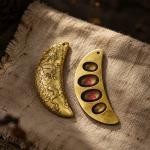
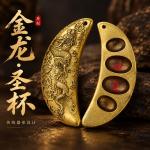
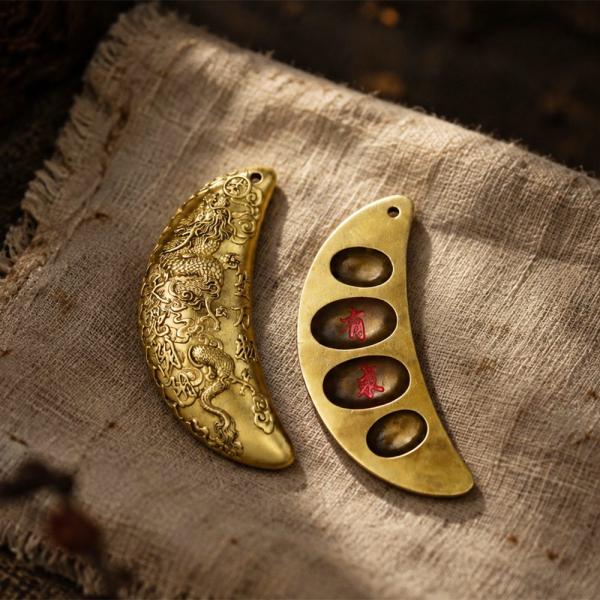
This is a display piece, not a pair of moon blocks for throwing. Cast in copper, the blocks land with a hard note and their corners chip, and if you actually intend to use them, bamboo or wood is the right material. Set on a desk, a bookcase or the edge of a tea table, what you look at is the shape of the pair and the dragon on them, for the auspicious sense of it and for the weight they put on a surface. Be clear about that before buying and you will not end up throwing them on the floor. Moon blocks come as a pair by nature: do not separate them when you arrange them, since apart they lose the point.
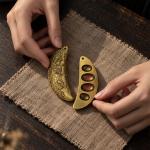
The sacred-cup name is the folk term; the proper name is jiaobei, or divination blocks, two pieces to a set, one face flat and one rounded. Thrown, the two land and the answer is read from how they fall: one flat and one rounded is the sacred answer, two flat is the laughing answer, two rounded is the yin answer, and the person asking judges by that. The practice is most common in southern Fujian and around Chaozhou, in temples and in homes alike. The apparatus is simple, and the emphasis falls on getting the question clear before you throw.
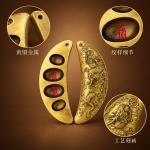
The golden dragon coils around the body of the cup, its head thrust out over the rim, its length wrapping once around, claws gripping the wall, scales layered one over another. A curved surface is hard to carve, and the turns of the dragon have to follow the arc; lose concentration and the body breaks into two pieces. On this pair the dragon's spine is continuous from neck to tail with no break. The whiskers are fine and are the first thing to run short in a casting, but they have survived here, only slightly blunted at the tips. Wall thickness can be judged at the rim: if the rim is even, the mould work is sound.
To arrange a pair, set them rounded face down and flat face up, side by side on a mat with a finger's width between them. Some people prefer one upright and one inverted for the yin-yang reading, which also looks well. Copper is heavy, and on a polished tabletop it will leave marks, so put felt or coarse cloth underneath. Keep them away from a window: sun on brass shifts the colour unevenly.
Brass oxidises faster than white copper. One touch leaves a fingerprint, and a few days without a wipe sets it on the surface. Wipe with a dry cloth rather than a damp one; water left in the channels between scales turns green. Dust in the crevices comes out with a soft brush, and what the brush misses can be blown away. To steady the colour, a thin coat of wax helps, but once waxed stop handling it, because fingerprints in wax look worse than an unwiped surface. Lift the piece by the base of the cup when moving it, not by the dragon's head, which is the part least able to take any load.