


Menu
By theme
By theme





{{ variable.name }} : {{ variable.values[selectedVariantsIndex[variable_index]].name }}
Quantity:
The plaque is a vertical rectangle, auspicious clouds above and seven grains of rice below. Each grain is raised, and they are not all the same size; they are set in two columns, four in one and three in the other, staggered rather than aligned. The arrangement is not arbitrary. Seven grains have to lie loosely to look scattered, and lined up they turn into a chequerboard. The cloud pattern sits above the rice, its head curling to the left and leading the eye upward. The plaque is not thick, and a narrow border runs the rim so the finger finds a clear boundary.
Seven grains of rice is an old folk saying. In some places a small cloth bag with seven grains inside is sewn for a child to carry; elsewhere people put seven grains in a pocket before setting out, for the sense of having food and not running short. Accounts differ from region to region, and some add tea leaves and salt to make up a small packet. Take this as custom, kept for peace of mind, with no fixed rule. Use new rice rather than old, as the elders used to insist.
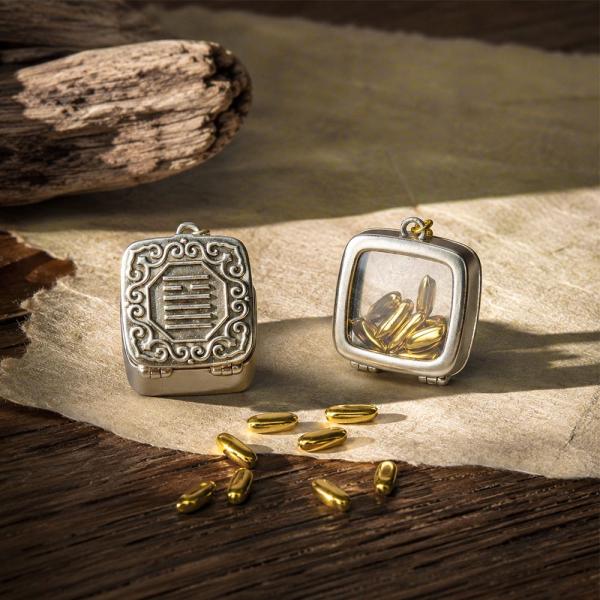
The antiquing sits in the recesses. The channels of the cloud pattern and the gaps between the grains are darkened, while the raised grains are polished bright, each one like a real grain of rice. The degree has to be judged: too heavy and it looks dug out of the ground, too light and there is no depth. The darks here are brown rather than flat black, and they grade into the pale ground of the white copper. Under light there is a fine bright ring around the edge of each grain. The dark is pressed into the base of the grains and thins toward the top, which is where the layering comes from.
Necklace or pendant, the difference is a chain. The necklace version has a fine chain and a light pendant that does not weigh on the neck. The pendant suits a cord, and a soft pattern like auspicious clouds goes better with a braided cord than a metal chain; the knot also covers the hole at the top. If your neck is short, take the pendant on a short cord so it sits above the collarbone. That is neater than a long chain, and it does not press on the chin when you look down. The colour is quiet, and it works with beige or grey-blue.
The grains are raised, so they take the most wear. Rubbed against clothing over time, the tops brighten and then settle at a certain point. Do not go over those bright spots with a silver cloth; too much of that rounds the grains, and rounded they stop looking like rice. Dust in the crevices comes out with a soft brush worked along the direction of the clouds. White copper dims as a whole, so patches of light and dark mean the wiping has been uneven.