


Menu
By theme
By theme




{{ variable.name }} : {{ variable.values[selectedVariantsIndex[variable_index]].name }}
Quantity:
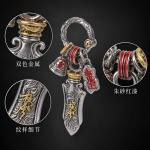
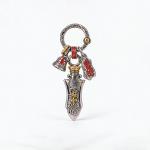
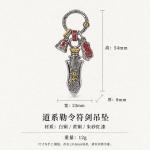
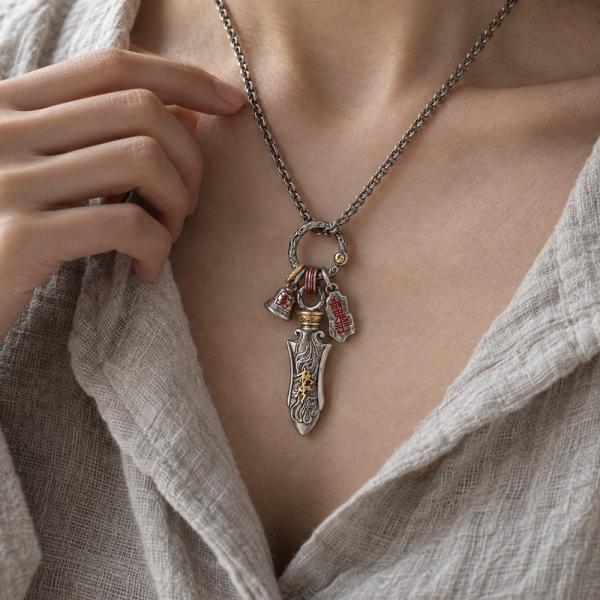
The sword plaque is narrow in the hand, a straight line from top to bottom that draws to a point at the tip. At the guard a horizontal ridge is pressed in, separating blade from handle. White copper runs cool; polished, it is not bright silver but a white with some grey in it, and when light sweeps across you can see the fine marks of the abrasive. The plaque is not thick, and the edges are chamfered, so it sits against the collarbone without digging and will not press a mark into clothing. The tip end is blunt: it does not prick the finger, and it is safe to wear.
A talisman plaque is shaped differently from an ordinary one, and its logic is the three parts, head, heart and foot. The head is usually the opening stroke of the Three Pure Ones or of a command; the heart is the solid body of the talisman; the foot trails off in a coil. The characters on this blade run in exactly that order, top to bottom, with tight leading and characters biting close to one another. In the old days a talisman was written on paper, then burned or sewn into a lapel; cut into copper, the aim is to last, unafraid of sweat or of being folded. The cuts are shallow, but every stroke is kept, and nothing is reduced to a single line.
Swords are not rare among Daoist ritual implements. The ritual sword and the Seven Star sword are both common, and hanging a sword is an old custom among folk protective objects. Shrinking the sword into a pendant, taking away the sharpness of the edge and leaving only the outline and those few lines of text, means it is no longer a weapon when it is worn. The back is mostly plain, occasionally finished with a cloud pattern at the rim; turned over it is a quiet piece of copper that says nothing.
The standard version is the pendant alone, with no cord and no chain. That suits anyone who already owns a chain and wants to match the gauge themselves. The hole is at the top of the hilt, and it is not large: too thick a cord will not pass, but a thin cord or a fine chain will. Choose dark brown or black for the cord; against the cool tone of white copper it does not fight, while a pale cord looks light. The hole is chamfered, so months of rubbing will not fray the cord or break a strand.
What copper fears is damp and sweat. Worn against the skin in summer, the face hazes over within a week; press it a few times with a dry soft cloth and it comes back. Skip the tissue. Paper contains wood pulp and will leave fine fibres behind. The tip is the spot most easily polished bright by clothing. That is not a fault; it is the shine the copper has been rubbed into. If you will not wear it for a long time, put it in a sealed bag with a small packet of desiccant, and do not leave it on a windowsill in the sun. Sun for long enough and the copper reddens unevenly, and no amount of polishing brings it back.