


Menu
By theme
By theme



{{ variable.name }} : {{ variable.values[selectedVariantsIndex[variable_index]].name }}
Quantity:
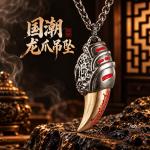
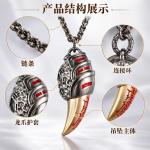
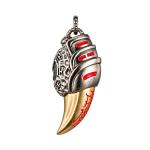
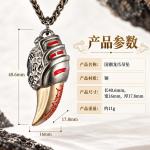
The claw is open, the five fingers spread wide, the knuckles raised, the nails hooked down as if it has just taken hold of something. The palm faces inward and is hollow at the centre, with light leaking between the fingers. The piece is not large but it has presence; on a table it reads as a small sculpture, with something to see from every angle. The hollow of the palm is finished coarser than the outside, deliberately left that way, so that it does not feel slick.
Dragon motifs appear very early on Chinese bronzes, already on Shang and Zhou vessels, where they were mostly coiling dragons or kui dragons, the body wound into a ring with the head hidden in the middle. Later the dragon entered the dress code and the number of claws became a rank: five claws for a dragon, four for a python, and the Ming and Qing regulated it strictly, so that the wrong one was punished. Folk objects were less particular. Three claws and four both occur, and what mattered was the air of power. On bronzes the dragon is about the body, the claw only the finish; the rise comes from the horns and the whiskers.
The difficulty of a claw is the knuckles. Cast, they blur easily: five fingers crowd together and you cannot tell which is which. Here deep grooves are left between the fingers, the backs are ridged, the tips are drawn to separate points, and every plane is accounted for. The copper is toned dark, darker still in the hollows, while the raised parts have been brought up a little with cloth, so the scales read in layers instead of a flat white. The back of each nail is curved too, and in the light all five tips carry a highlight.
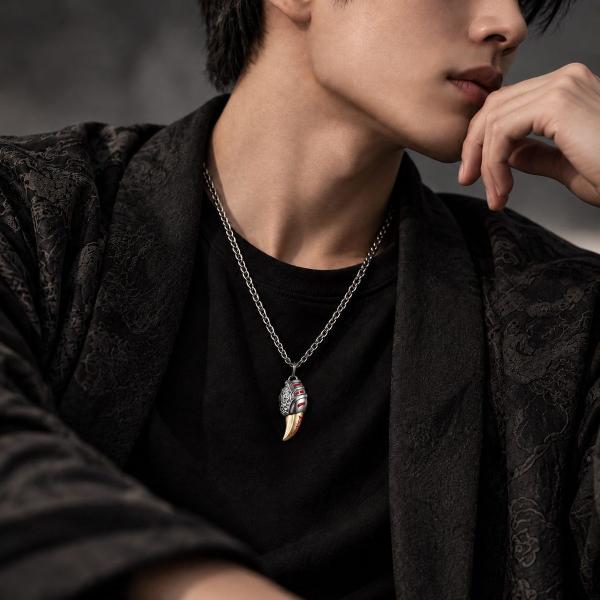
Two forms: on its own, or on a chain. On the plain pendant the hole is at the wrist, so the claw hangs naturally with the fingers pointing down. The chain version uses fine links and the pendant turns a little on the chest; turned over it shows the hollow of the palm, and some people prefer that side. The chain usually falls below the collarbone, just visible with a crew neck and hidden by a high collar. A waxed cord is the better choice for cord, high in friction, so the weight of the claw holds and it will not slide off to one side.
White copper is not very hard, so do not dig at fine places like the finger grooves with anything rigid; a toothpick or a needle will leave scratches. Wash in warm water with a little neutral dish soap, run a soft brush along the grooves, rinse and dry at once. If the surface goes dull, push it lightly with a silver cloth, but do not press hard, because pressure rounds the edges and the claw loses its sharpness. Green verdigris in the grooves can be lifted out with cotton wrapped round a toothpick, not with a metal needle.