


Menu
By theme
By theme





{{ variable.name }} : {{ variable.values[selectedVariantsIndex[variable_index]].name }}
Quantity:
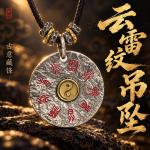
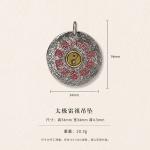
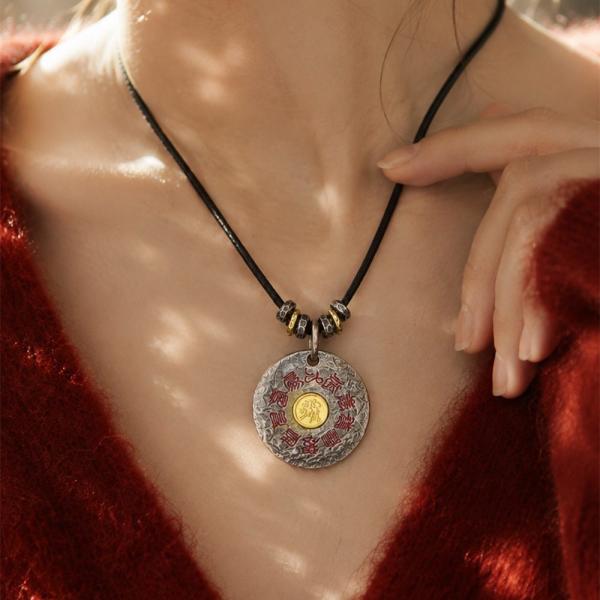
The plaque is round, and an S-shaped line divides it in two, one half raised and one recessed, the raised half polished bright and the recessed half left dark. Two small dots fall on opposite sides, yin inside yang and yang inside yin. The line is not drawn freehand; the curve must be even and both ends must land accurately, or the whole figure sits crooked. A plain border runs round the rim, holding the figure in the middle rather than running to the edge.
The taiji diagram in its current form is generally traced to the Song. Zhou Dunyi wrote the Explanation of the Taiji Diagram, speaking of the ultimate of non-being and then taiji, joining the figure to Neo-Confucian cosmology. The figure itself is older than the text: its sources run back to earlier yin-yang fish and intertwined dragon motifs, and it evolved into the clear black-and-white form we know. In old editions the diagram was cut in stone, its lines heavier than modern printing, with commentary at the sides.
The Thunder Ancestor is the Nine Heavens Responding Prime Thunder Sound Universal Transformer, the highest deity of the Daoist thunder department. After the Song and Yuan, thunder rites flourished and the Shenxiao school took him as its principal figure, with a scripture, the Yushu baojing, devoted to him. His images in temples are usually mild-faced, unlike the impression thunder gives; the scripture stresses the words universal transformation, and the emphasis falls on teaching rather than terror. The thunder department handles a mixed portfolio, rain prayers, exorcism and averting disaster, so incense has never stopped. His full title is long and takes a single breath, and in liturgy it is usually shortened to Thunder Ancestor.
Taiji and the Thunder Ancestor are cut on one plaque, a figure on one face and a hui on the other. The figure face gets its depth from the raised and recessed yin-yang, the hui face from the depth of the cuts. Between the two is the rim, with a fine line running round it to separate them. The hole is at the top centre, so the face looks forward once strung and does not turn over by itself. The hui on the back is cut shallower than the figure on the front, and both faces share one piece of metal with the same thickness.
The raised and recessed surfaces need different treatment when cleaning. The raised can take a cloth; the recessed takes only a cotton bud, since a cloth cannot reach the bottom and will push the dirt to the edge. White copper yellows with time, so use brass polish on the raised part only and leave the recessed alone, because that is what keeps the contrast. Never soak the whole thing in silver dip: both faces come out one colour and the figure is gone. The cloth used for polish should not be used on anything else, since the paste on it will scratch the next piece.