


Menu
By theme
By theme


{{ variable.name }} : {{ variable.values[selectedVariantsIndex[variable_index]].name }}
Quantity:
Gau is Tibetan for a small relic box carried on the body. Inside go images, scripture, relics, or a lama’s clothing or hair; some people put in a pinch of earth from home. In Tibetan areas it is worn on a cord and not taken off for riding or travelling. The boxes are round, square or pot-shaped, in materials from silver to copper, and good work has a gold band round the lip. What goes inside is each person’s own business, and the box itself presumes no contents.
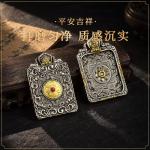
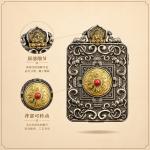
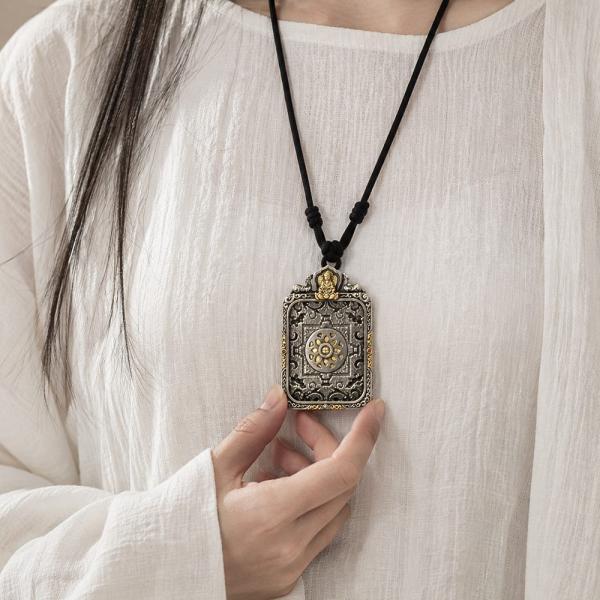
This is a small box, lid and body clipped together, hollow inside and openable. The form is the Tibetan gau, the front domed, a band of beadwork round the edge, a hanging loop soldered at the top. Closed, it looks like a thicker plaque and you would not guess that it is hollow. The dome is shallow, so it does not press when layered under clothing.
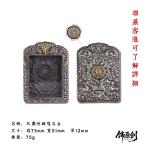
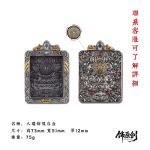
Six patterns are available for the lid. In the two deer listening to scripture, two deer kneel on either side of the wheel of dharma, the first turning of the wheel at the Deer Park. The eight auspicious symbols are the parasol, the golden fish, the treasure vase, the lotus, the right-turning conch, the endless knot, the victory banner and the wheel. The joined palms motif is two hands held at the chest. The eight auspicious substances are mirror, curd, milk, grass, fruit, conch, medicine and incense. The alms bowl is what renunciants carry for begging. The flame pattern is the fire around a halo. All six are common Tibetan subjects, found on temple doorways and murals. Which one to choose is a matter of affinity, and none ranks above another.
The box comes in two parts; lid and body seat on a stepped lip and are tight once closed, so it must be opened along the seam. The space inside is small: a folded slip of paper or a small piece of cloth will go, thick things will not. Never force the lid shut. The lip is thin and if it is pressed crooked it will not close properly, and a box that does not close rattles when worn. A fine groove runs inside the lip and a corresponding ridge on the lid seats into it; that is what seals the box.
What a copper box fears is being left shut. Closed for a long time, the lip oxidises and the next opening is stiff. Open it every few months, let it breathe, and wipe the inside while you are there. Clean the outside pattern with a soft brush; dust gathers between the beads of the beadwork, so blow it out after brushing. Do not soak it, because water inside dries slowly and leaves marks. If the inner wall goes dark, wipe it dry with a soft cloth, not brass polish, since the smell of the paste stays inside the box.