


Menu
By theme
By theme



{{ variable.name }} : {{ variable.values[selectedVariantsIndex[variable_index]].name }}
Quantity:
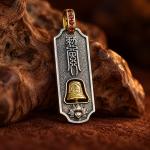
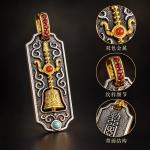
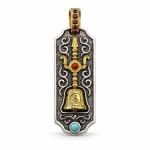
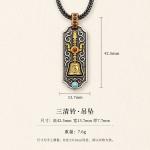
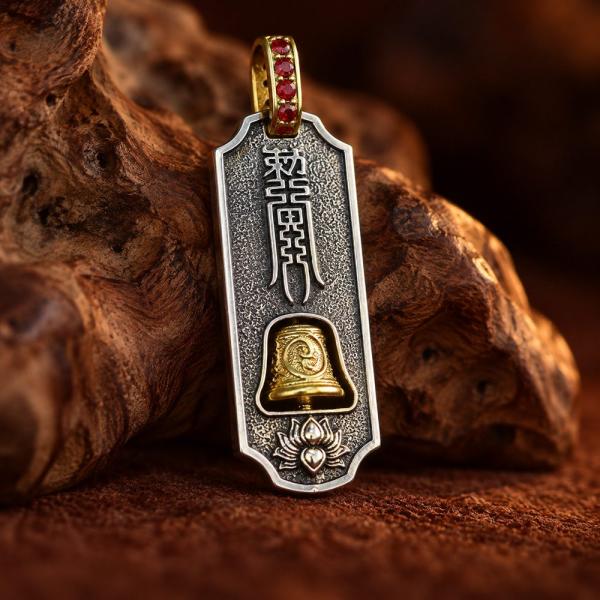
The body is a small bell shape, the mouth flared outward and narrowing at the top into a handle. The top of the handle splits into three prongs of equal height, the middle one a little thicker. The piece is hollow and gives a faint sound when shaken, quiet and muffled, like a tap through cloth. A band of meander runs round the mouth, shallow, and only at a certain angle can you see it. The outside has a matte finish that reflects no figure, and it looks old.
The sanqing bell is a Daoist liturgical implement, also called the emperor’s bell or ritual bell. The priest holds it in the left hand and shakes it to summon; once the bell sounds, the order of the altar is set. The three prongs of the handle stand for the Three Pure Ones, the body usually carries cloud-thunder or a hui, and each school does it differently, with some bells holding a small clapper inside for a finer sound. The bell is not loud, but the opening of an altar cannot do without it, and the turns in a rite are marked by it. A ritual bell and a musical bell are not the same line: one is about gesture, the other about pitch.
For a bell to sound, the wall must be thin. A thick cast wall will not ring, a thin one cracks, and the balance is all in the casting. This is a pendant, small, so the sound is limited and the shape matters more. The rim is polished and does not cut, and shaken it gives a short note that dies at once and does not annoy. Handle and body are cast in one piece, the joint at the crown, and after polishing only a faint line remains.
Three options: with a cloud cord, with a Chopin chain, or the bell alone. The cloud cord is braided and knotted behind the neck, dark, and suits the cool tone of the copper; the Chopin is fine, the bell hangs at its end and knocks lightly as you walk, making a little sound; the bell alone has a hole at the top of the handle, and you fit your own cord or chain. The cloud cord’s knot is a slip knot and can be drawn, so a difference of two or three centimetres does not mean a new cord.
The body is hollow and will dent under pressure, so store it on its own rather than crowded with other jewellery. If dust gets inside, tip it out; do not rinse it, because water left on the inner wall breeds verdigris. Verdigris on the hands should be washed off. If the sound goes dull it is usually because the rim has been knocked out of shape, and that cannot be repaired, only replaced. When not wearing it, set it mouth up rather than down, since the rim takes the load and distorts most easily.