


Menu
By theme
By theme



{{ variable.name }} : {{ variable.values[selectedVariantsIndex[variable_index]].name }}
Quantity:
The white crane acolyte appears in Ming dynasty novels of gods and demons; in the Investiture of the Gods he is an acolyte beside the Primeval Lord of Heaven, carrying his messages and delivering his treasures. Temple sculpture often has such acolytes standing on either side of the main figure, one holding a seal and one a banner. The name takes the crane’s otherworldliness: in Daoism the crane stands for long life and ascent, and cranes painted on walls are usually shown leading the way. Folk New Year prints also have the white crane acolyte, mostly in the theme of sending children and announcing good news, which is a different line from the temple figure. The crane in the name is closer to the crane itself than to any particular story.
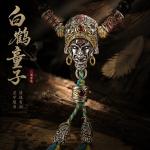
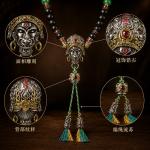
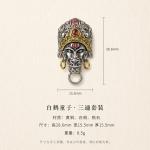
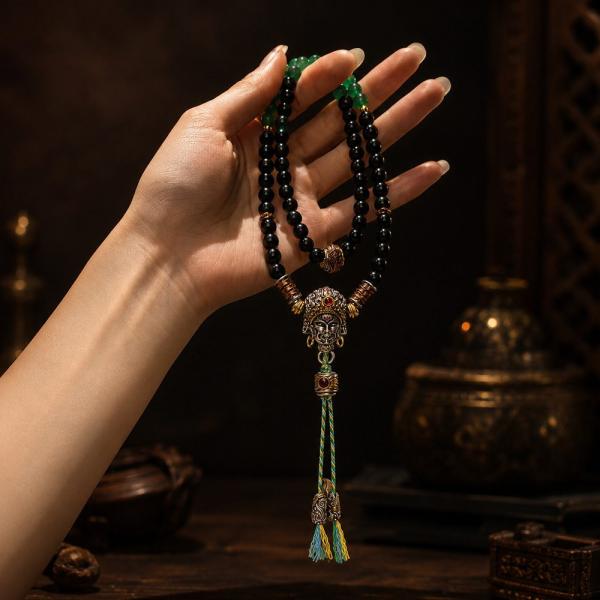
On the three-hole bead stands an acolyte, hair in two buns, wide sleeves, one hand raised and the other hanging, cloud heads underfoot. The figure is small and the head slightly large, the proportion common in folk sculpture, so that it looks neither old nor childish. Only a few folds are cut into the robe, and the rest is carried by the rise and fall of the copper. The cloud heads are made thick enough to hold the figure up, so that it is not top-heavy.
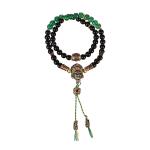
The three-hole bead sits at the gathering point of a bracelet, the acolyte standing on top with the head facing out. The holes run in under the feet: the cross hole for the loop and the vertical for the tail, meeting inside. If the holes are set slightly off, the figure leans, which is why this is the hardest piece to drill; ruin one and the piece is scrap. The walls have to be reamed smooth, because the line runs back and forth inside and a burr will cut it.
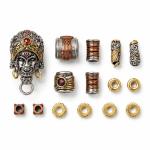
The set includes spacers and disciple beads, generally enough to string a complete bracelet. The single piece suits filling out a strand, for someone who already has one and lacks only a three-hole bead. Copper and wooden beads differ widely in colour, so together they are a contrast; for a plainer look, choose dark wood, which holds the copper down. The spacers in the set are thin and go between copper and wood to prevent wear.
The acolyte’s cuffs and the cloud heads are thin places and will distort if knocked. Do not pull the line too tight when stringing, since tight will press a mark at the mouth of the hole. Clean with a soft cloth and use a cotton bud in the sleeve folds. Copper darkens with wear, the raised places brightening first and the recesses darkening first, so that the face acquires light and shade. What the acolyte holds is left vague, with no specific object, for the viewer to fill in.