


Menu
By theme
By theme


{{ variable.name }} : {{ variable.values[selectedVariantsIndex[variable_index]].name }}
Quantity:
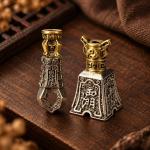
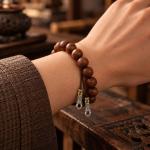
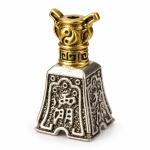
The disciple beads are a short strand, a few to a group, hung below the Buddha head in two parallel runs. The beads are small, a size under the main beads, plain and with no pattern. A gourd-shaped cap at the top gathers the two lines together, and the strand hangs and sways slightly as you walk. A line is cut at the waist of the gourd, the cord passes through the middle, and the knot is hidden inside. Two to a row, the drop is set by how tight the cord is drawn, so compare the two sides before knotting.
On a mala the disciple beads are for counting. A strand has one hundred and eight beads; finish a circuit and move one disciple bead, and after several circuits you know where you are without spending attention on it. Some treat them as ornament, hanging below the Buddha head so that the weight of the whole strand sits lower. Disciple here means the juniors who follow the main figure, and their place is last. The number varies, five or ten, matched to the specification of the main strand.
Husheng, “protecting life”, in Buddhism means not killing and caring for sentient beings. Temples once had release ponds, and there were days set aside for releasing animals among the folk; both are extensions of the same idea. Putting that idea on a small strand of beads is a recent habit among curio collectors; traditional malas do not carry the two characters, so the usage is new. Cut on the beads, the two characters have few strokes and take little room, and without close looking they do not show. Releasing animals has gone on among the folk regardless of scale, and its point is not killing.
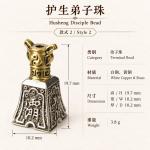
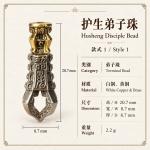
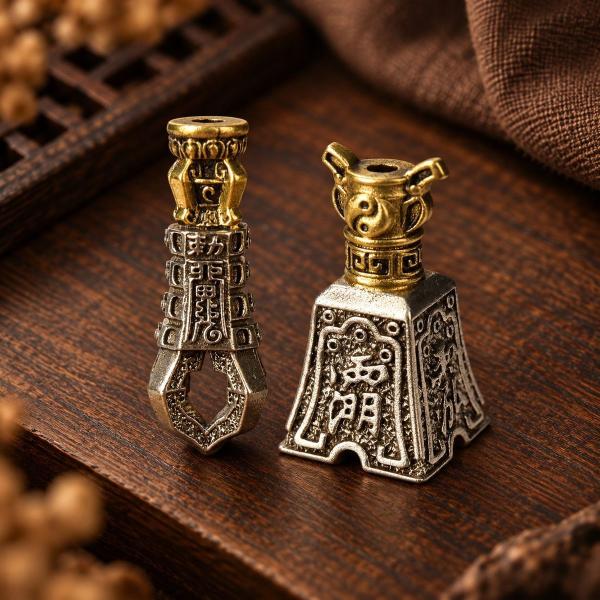
Two versions, the husheng disciple beads and husheng disciple beads-2, differing in the arrangement of the beads and the cap. One runs straight, with the cord going down; the other adds a spacer bead in the middle and hangs longer. Look at the pictures before buying: the two use different amounts of material and suit different lengths of main strand. The straight version is tidier, and the one with the spacer hangs longer and has more movement.
Disciple beads are a fitting, and you string them yourself. Use elastic or plain line according to what the main strand uses, because mixing the two is out of key. Put a small washer between copper and wooden beads to avoid a wear mark. Wash the whole strand together rather than taking the disciple beads off to soak, since soaked line softens and breaks easily when restrung. When changing the line, cut the old one and draw it out; do not pull hard, which opens the holes.