


Menu
By theme
By theme


{{ variable.name }} : {{ variable.values[selectedVariantsIndex[variable_index]].name }}
Quantity:
The sword lion is an old object of southern Fujian and the Tainan area. On the lintels of old houses in Anping you often see a wooden board or a clay figure of a lion with its jaws open on a sword, the blade held crosswise before its mouth, fierce even at a distance. Craftsmen in that trade say it was first hung on doors to block what came at the house from the street, and only later moved to the chest as a charm. From the door to the body, the presence is reined in a notch. A few old streets in Anping still carry sword lions, and plenty of people make the trip to see them, though few are made as pendants.
There is more than one account of how the lion and the sword came together. The most widely told one belongs to Zheng Chenggong's troops: the soldiers painted a lion on their shields, and when the order came to stand down they thrust their swords into the shields, and people copied the look and made the sword lion. That is a legend, not a settled conclusion. Say as much when you tell it, and do not sell it as documented history. Folk practice also reads a meaning into which way the blade points, left and right each explained differently and the versions disagreeing, so I will leave it alone here rather than get it wrong.
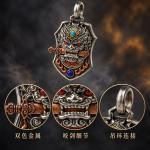
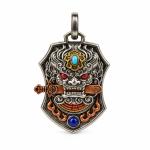
The white copper lion head is made rather square, the mane curling up in rings, the teeth clamped on the blade, which passes out crosswise from the corner of the mouth. Casting an open bite like this is the hardest part of the mould. Leave the gap too wide and the shape goes blunt; leave it too narrow and it cracks, and most rejects fail at this point. White copper has enough toughness that thin sections do not break easily, and an everyday knock leaves a shallow mark rather than taking off a piece. Lions are not native to the Central Plains and only came in from the Western Regions after the Han, which is why early lion figures carry a foreign look.
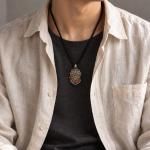
Two versions are offered, one with a leather cord and one without. Leather's advantage is its deep colour, which sits well with the aged look of the copper, and in summer it does not lie cold against the skin the way a metal chain does. Leather dislikes water, so take it off to shower, and when sweat is heavy press it dry with a cloth instead of rubbing, because rubbing lifts the grain and mottles the colour. Thickness matters as well: too thin and it cuts into the neck, too thick and it looks clumsy. For a pendant this heavy, medium is the steadiest choice.
This one carries a hard story, so think first about whether the recipient will take to it. It suits a friend who likes folk custom, works on a site or travels often; a woman who prefers something light may find it too fierce. If you want to explain a meaning, talk about guarding the house and about the old houses of Anping. That is steadier than the mystical line and it survives follow-up questions. If there are small children in the house, put a fierce-faced charm aside for now and choose a rounder auspicious beast instead.