


Menu
By theme
By theme



{{ variable.name }} : {{ variable.values[selectedVariantsIndex[variable_index]].name }}
Quantity:
Seven grains of rice is a small piece of old custom in the south. When an elder set out on a long journey, they would count seven grains from the rice jar, wrap them in red paper and carry them, then deal with them once they arrived. Why seven is explained in different ways: some say it answers the seven stars of the Northern Dipper, some that seven is a number of cycles, some that it is simply an odd number. The custom is minor, yet it turns up in many places. Rice was hard currency in the old days, and counting out grains to carry carries a layer of thrift as well.
Hulu, the gourd, sounds like fulu, blessing and prosperity; ruyi is another auspicious object, and the two together give fulu ruyi. The gourd is small above and wide below with a vine that runs on, and old design sheets often show a gourd on a winding stem for unbroken descendants. The ruyi began as a back scratcher and later became a ceremonial object held in the hand, its head shaped like a lingzhi fungus. Combinations of this kind are most common on Qing folk pieces. The ruyi form varies by maker, cloud head and lingzhi head both usual, and depends on the drawing in the craftsman's hand.
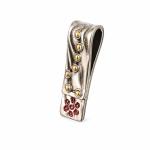
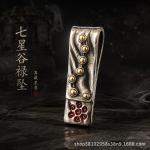
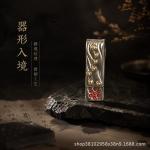
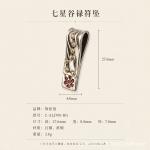
At the top of the pendant is a ruyi head, below it a gourd, with a pinched waist between. It is cast in white copper, relief on the face, the back left flat. The cord version is listed with an auspicious-cloud sandalwood cord, dark in tone and knotted in a cloud pattern that sits well with the old colour of the copper; the pendant-only version suits anyone who already has a cord or chain and wants the freedom to change it. The flat back is a detail often overlooked: it does not dig into the chest, and a day of wearing shows the difference.
The seven grains are handled differently from maker to maker. Some are sealed inside the gourd's belly so it rattles when shaken; others are worked on the outside as a pattern that reads like the character for rice. If that matters to you, ask before buying rather than working it out after the parcel arrives, which also saves a return. The gourd's waist is thin and easily broken when the mould is pulled, so hold it to the light and check that pinch for pinholes. The cord version is wearable on arrival, the knot can be shifted, and a small difference in length does no harm.
Pieces like this suit a new mother or a young couple who have just moved in, since the meaning is plain, not frightening, and the price does not press. One caution: it is an auspicious subject, not a ritual object, so do not lead the talk toward consecration and offerings. Say too much and it stops ringing true, and anyone who knows will hear the invention. For a child, keep the cord short and the knot firm; under three years old I would not recommend wearing it at all, for fear of pulling.