


Menu
By theme
By theme


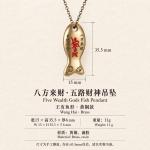
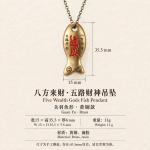
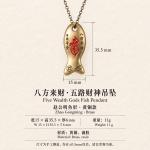
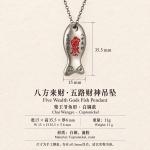

{{ variable.name }} : {{ variable.values[selectedVariantsIndex[variable_index]].name }}
Quantity:
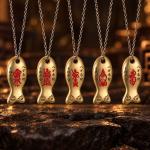
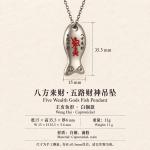
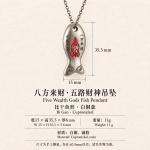
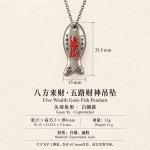
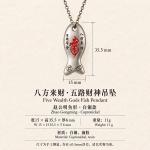
The options on this piece list five figures: Lord Chai, Guan Yu, Zhao Gongming, Bi Gan and Wang Hai. All of them count as wealth gods in folk religion, but the roads they took there differ. Bi Gan is a civil wealth god, heartless and therefore impartial; Guan Yu is a martial wealth god, standing for trust and honour. Zhao Gongming is the Zhengyi altar lord commanding the four routes, and Lord Chai, Emperor Shizong of the Later Zhou, is honoured by the kiln trade as its founder. Wang Hai was an early Shang ancestor whom later merchants worshipped, remembering the old business of driving oxen to trade.
The five are made as separate options because the wealth god honoured differs by region. The north mostly honours Zhao Gongming, southern shops honour Lord Guan, porcelain kilns honour Lord Chai, and old trading houses recognize Wang Hai. Which to choose is a matter of trade and geography, not of who is more efficacious. Ask that clearly before ordering, which beats picking a face from a photograph. The five-route wealth god formula is often applied to the group, but the lists differ by place, some swapping Lord Chai for Guolao, so do not force the fit.
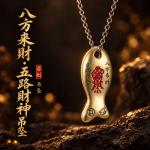
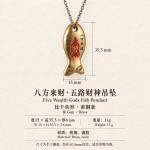
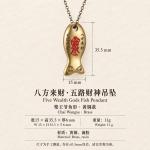
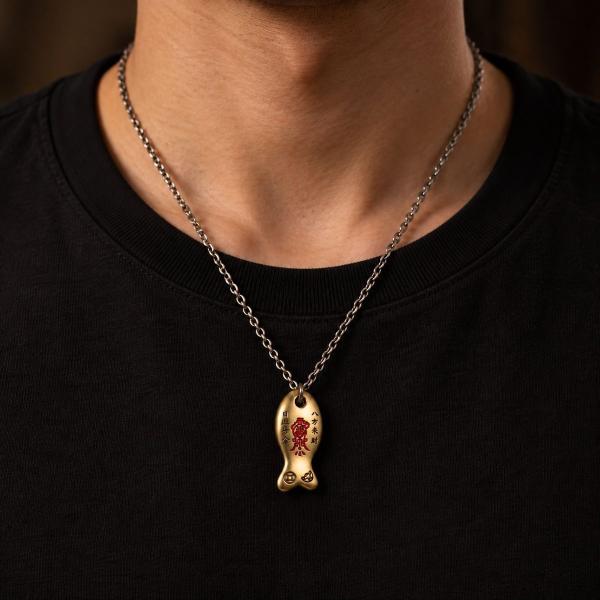
The fish shape is the base of this piece. Fish and surplus sound alike, surplus every year is the old saying, and paired with a wealth god the meaning layers up. The body is made flat and broad with the tail lifted, the scales shallow-cut with a little ground left between them, so that light gives it layers. The curve of the lifted tail is a sweep when done well and a break when done badly, so check whether the root of the tail closes smoothly. The scales are laid from tail to head, each overlapping the next, and reversed they become spines.
Enamel is a glaze filled into a metal body. Once fired, the colour sits deep rather than floating on the surface the way lacquer does. In cloisonné, wire separates the colour fields and the boundaries stay crisp; without wire, the colours divide by the filling itself and the edges are softer. Each method has its own character, and what matters is whether the filling is even. The glaze goes in two or three passes, each fired before the next; put it on thick in one go and it shrinks in the kiln, leaving hollows. After firing the enamel is ground back, since only a levelled surface comes up bright, and an unground one feels grainy.
The white and yellow in the options are colourways, not two versions of one figure: Lord Chai, Zhao Gongming and Wang Hai come on a white ground, Guan Yu and Bi Gan on a yellow one, and there is a separate Zhao Gongming supplied with a necklace. Enamel reads bright on white and deep on yellow. Look closely at the eyes and the beard, since colour bleeding there ruins the whole face; and do not scrub the enamel with a hard brush, because once the glaze is scratched the colour is dead.