


Menu
By theme
By theme





{{ variable.name }} : {{ variable.values[selectedVariantsIndex[variable_index]].name }}
Quantity:
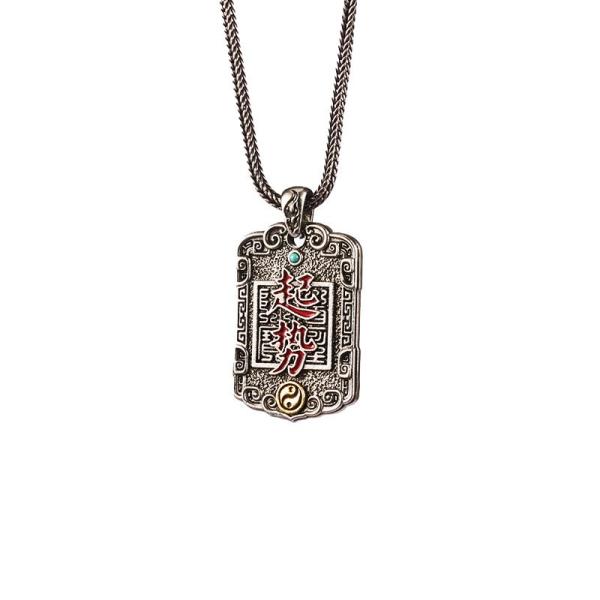
A square plaque at the chest stays steadier than a round pendant when it turns. A round pendant swings on its chain and the design faces forward, then backward, then forward again. A square has four corners and a hole in the middle, so gravity lays it flat and the front stays outward. The principle is the same as hanging a picture: weight sitting low does not swing. The difference shows most when you layer. Two round pendants side by side set each other turning. A square one does not.
The opening move is the first form of taiji quan. Feet together, arms hanging naturally, then raised slowly to shoulder height, then the knees bend and the hands press down. The whole sequence starts from there. It is the simplest movement in the set and the hardest to get right. Sink the shoulders as you raise, release the waist as you lower, and if it is wrong the rest of the form is crooked. The image on the plaque takes the moment halfway up, arms level, palms down. That moment is awkward to cut, because the arms are horizontal, and a horizontal line on a small plaque merges into the border.
The taiji diagram is the pair of fish, one black and one white, each holding a dot of the opposite colour. The diagram settled very late. Zhou Dunyi's Essay on the Taiji Diagram describes a different figure altogether, not the fish as we know it now, and the fish shape only became common in the Ming and Qing. So when somebody tells you the fish are ancient, do not believe it. The S line down the middle is where the hand shows. The two arcs have to meet, and where they fail to meet, the fish is broken.
The four sides carry a narrow border, plain within, with the diagram in the middle taking up less than half the area. All that blank is there to stop the face going stuffy. Polished white copper is a cold white, and a plain field catches a faint sheen that makes the design read deeper. A plain field also hides nothing. A single scratch sits there in plain sight, which is why this is not the piece to carry in a pocket with your keys.
Flat plaques like this fear a knock on the corner. The corners are right angles, they curl when dropped, and a curl cannot be repaired. The ring around the hole is thin as well, and cord wears it wider over the years, so change the cord every six months. That is cheaper than repairing a hole. Choose a dark cord. White copper against black is the cleanest pairing, and red competes with it. If the corners feel sharp when the plaque arrives, two light passes with fine abrasive paper will blunt them. Square corners are there to be looked at, nothing more.