


Menu
By theme
By theme

{{ variable.name }} : {{ variable.values[selectedVariantsIndex[variable_index]].name }}
Quantity:
Dragon and phoenix are named together very early: Shang and Zhou bronzes already carry both on a single vessel. After the Han, the dragon belonged to the emperor and the phoenix to the empress, and the pair became a marker of rank. Folk practice ignored the protocol and kept using them together on wedding goods, for the sense of a matched pair, a habit that runs down to the wedding quilts and bowls of the present. Han swords had straight blades, and sword pendants mostly follow those proportions, narrow at the shoulder and tapering slowly to the point. Phoenix imagery flourished especially in Chu; the birds on silk paintings there have long necks and tail feathers that curl over.
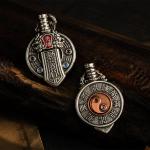
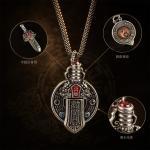
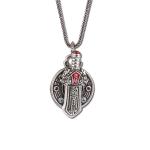
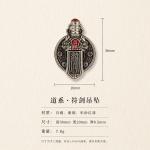
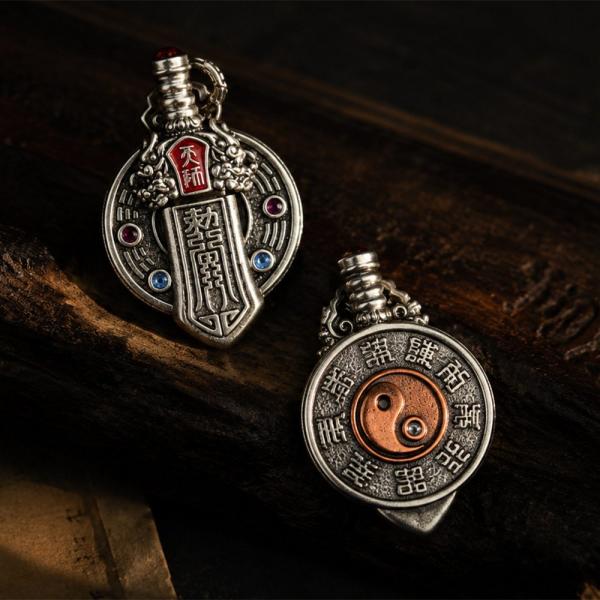
A sword pendant in white copper, dragon on one face and phoenix on the other, with the scales and feathers cut shallow so the relief shows through reflected light. The guard is made wide and carries the weight of the piece; the centre of gravity falls where the fingers hold it, which makes it steady in the hand. The pommel closes into a small round knob rather than a point, so nothing pricks the skin. The two creatures are drawn at different weights, a heavier line for the dragon's body and a finer one for the phoenix's feathers, and that is where the contrast comes from. The ridge lines down both edges of the blade have to be straight; let them wander and the whole piece looks slack.
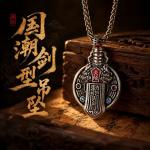
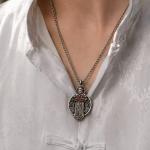
National trend is a term of the last few years, but the method is old: move a traditional pattern onto a vessel shape that never carried it. A sword form is a weapon shape, and with dragon and phoenix on it the piece turns literary. The two temperaments cancel each other, so it does not read as aggressive when worn. Younger buyers like the mismatch, and older ones do not find it frivolous. Choose a fine chain. The sword is narrow to begin with, and a heavy chain on it looks top-heavy. With a suit, the chain sits better tucked inside the shirt.
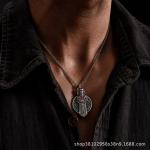
The necklace and the pendant alone are not the same purchase. A sword runs long, so a short chain will ride against the throat, and even a standard length may not sit well; measure before you decide. Buy the pendant alone and thread your own cord through the hole in the hilt, with a flat knot to finish. The hole is small, and a thick cord will not go through; change the cord rather than enlarging the hole, because opening it thins the hilt at that point. Take the pendant off to shower, since moisture gets into the join between guard and blade and cannot be wiped out.
A white copper sword is most at risk from bending. The blade is narrow and gives easily to sideways force, and once bent it does not come straight again: copper remembers. Hold it by the guard when putting it on or taking it off, not by the tip. Store it lying flat rather than standing it in a box pressed against hard objects. For long stretches unworn, roll it in soft paper first, which saves a good many scratches. Keep toothpaste off white copper sword pendants: the grit works into the cut lines and is harder to clear afterwards than before.