


Menu
By theme
By theme





{{ variable.name }} : {{ variable.values[selectedVariantsIndex[variable_index]].name }}
Quantity:
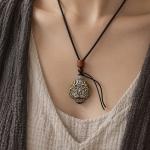
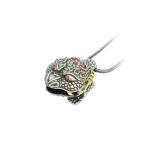
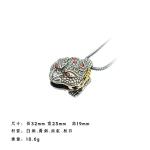
The golden toad has three legs. That detail is not arbitrary: three-legged creatures are rare in folk objects, and the rarity is exactly why it sticks in the mind. In the tale of Liu Hai teasing the toad, the three-legged creature that spits coins is subdued, and thereafter money follows wherever it goes, a story painted into New Year prints for centuries. The three-legged toad appears on Song bronze work and more often in the Ming and Qing, mostly as a desk piece. Its back often carries the Big Dipper, which folds together the idea of wealth and the idea of the stars.
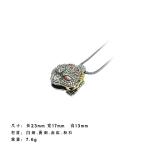
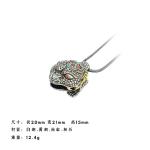
The charm is copper, the toad crouched on the body of a bell whose mouth faces down, with a small pellet inside that sounds when it moves. Three sizes: the small for a bag, the medium for a car, the large for the back of a door or a desk. The note is not bright but dull, which is copper's own character; anyone wanting something clearer should pick a thin-walled bell, and that has to be judged in the hand. The bell's diameter steps down across the sizes and the pitch steps with it. With the mouth down, the sound travels downward, so hanging it high actually quietens it.
The toad usually holds a coin in its mouth, and here the coin is in relief rather than cut through. Which way it faces is a matter of doctrine: inward rather than outward, so that money is drawn in. Such rules vary by region, worth hearing and not worth arguing over. Where you hang it matters more than which way it faces, and it only makes a sound on a door you actually use. A bell at the door served as a doorbell in the old way, so the house knew when a guest pushed it open. One in a study, sounding once as the air moves through, wears better on the ear than an electronic chime.
What makes a bell charm useful is the sound. In a car, take care: a rough road sets it ringing the whole way, so choose the small size or take the pellet out. The pellet goes back in easily enough, so do not lose it, because a single pellet is hard to replace. Keep the bell out of a child's reach, since copper castings have edges. Take it down before moving furniture rather than carrying the bell by its body.
A copper bell does not survive drops. The wall is thin, and one fall dents it, and a dent takes the voice out. The toad's feet are the finest part and the most fragile, so do not let them rub against anything hard while it hangs. Wipe with a dry cloth rather than rinsing: water in the bell chamber cannot be shaken out, and it breeds verdigris, which muffles the note further. Once verdigris has started, wipe it over with a soft cloth dipped in vinegar and dry it at once; that holds it back for a while.