


Menu
By theme
By theme



{{ variable.name }} : {{ variable.values[selectedVariantsIndex[variable_index]].name }}
Quantity:
In the old texts the pixiu is a fierce beast, named in a fu by Sima Xiangru alongside tigers and leopards. Folk tradition later gave it two more properties: what goes in does not come out, and it can tell gold from silver. With those it became a wealth motif. The shift came after the Ming, tied to the spread of popular fiction: once storytellers took it up, the image travelled with the telling. In folk telling the pixiu has a mouth and no anus, so what it eats stays, and that is the root of the wealth reading, a long way from the beast in the old books.
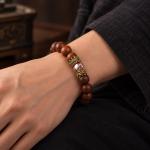
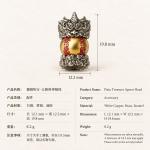
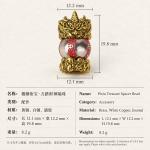
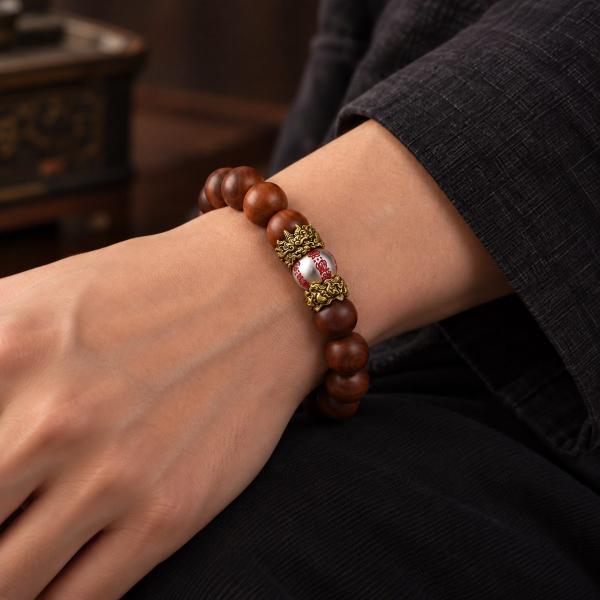
A three-hole bead with the pixiu crouched on the body, a treasure pearl in its mouth. The pearl stands proud and is the brightest point on the piece. Two colours, white copper and brass, plus a finished bracelet in the white copper version, strung and ready to wear out of the box. The listing is not complete on what the bracelet's beads are made of, so ask if it matters to you. Brass runs darker and white copper runs silver, and the two call for different beads around them. If the bracelet's beads are wood, keep it away from water.
Check which way the holes run: the cross hole takes the main string, the vertical one takes whatever hangs below. Thread the cross hole first and gather the line after; reverse the order and the ends show on the outside. If the mouth of a hole has a burr, roll a tube of fine abrasive paper through it a couple of turns. Do not scrape with a blade tip, which leaves a groove in the wall. The bore is drilled for ordinary stringing cord, wide enough for two strands. Note the order of the beads when you take a string apart, so it goes back together without confusion.
Which way the pixiu's head should face is disputed. Some say outward, to bite at wealth; some say inward, to guard what is already there, and both are argued. Decide by your own habit and then leave it, because turning it this way and that undoes the point. Once the three-hole bead is in place the join sits at the back, with no cord ends showing at the front. On the left wrist, head toward the little finger reads most naturally.
Worn against the skin, copper dulls. The raised parts, the ears and the tail, brighten first, and the hollows darken first. That is patina, not dirt. Clean it in patches rather than soaking the whole piece, which strips the patina off along with the grime and leaves the colour mottled. The seam between pearl and mouth is fine, so take it with the corner of a cloth rather than digging with a pin. Keep copper out of silver dip; that liquid is formulated for silver and will mottle copper.