


Menu
By theme
By theme



{{ variable.name }} : {{ variable.values[selectedVariantsIndex[variable_index]].name }}
Quantity:
In folk usage the word for fish is the same as the word for surplus, the one in the old saying about a surplus year after year. The pun is everywhere: a fish with lotus in a New Year print means surplus year on year, and with peony it means wealth in surplus. That is why the fish is made round and fat. Realism is not the point; the belly has to swell and the tail has to lift for the thing to look auspicious. Fish were cut into bronze basins as early as the Han, and the fish in New Year prints is usually a carp, for the leap over the dragon gate.
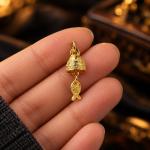
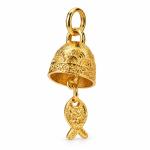
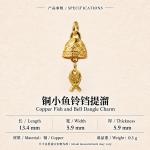
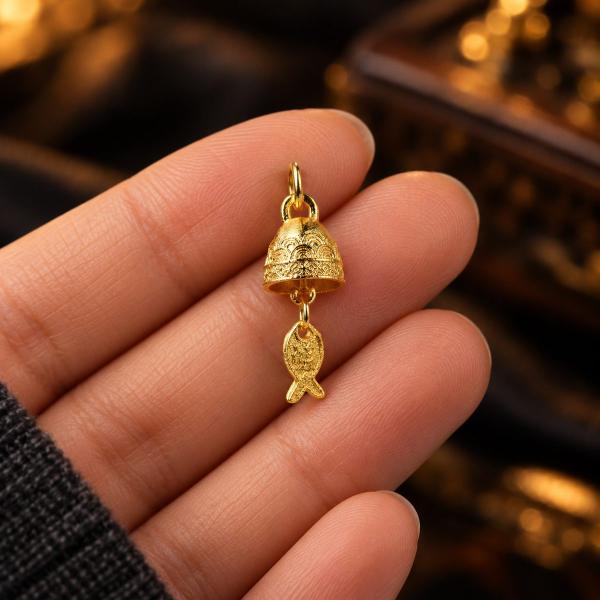
Diliu is northern speech for a small drop hung below a string of beads. This one is a little fish with a small bell: white copper body, tail lifted, the bell hanging under the fish's mouth and sounding thinly when it swings. The bell is a sphere with the opening underneath, and the pellet inside is wider than the opening so it cannot fall out, which is the old way of making one. The loop sits on the fish's back and the weight hangs low, so it does not turn over as it swings. A short length of chain joins bell to fish, and the links are fine, so do not pull hard. The bell is small and the sound does not carry, which is right for a room.
It sits best at the closing end of a bracelet, where a swing of the hand gives one note, not enough to annoy. It will also go on a bag zip, a key ring or the drop of an earring, depending on the size of the loop. Earrings are the least common use: the copper has weight, and a thin lobe will ache by the end of a day. On a bag, keep the bell off the zip itself or it rings the whole way. As a gift, a small piece like this works better than a large one, because it suits anybody.
On a small piece, workmanship shows in two places: whether the scales are cut cleanly, and whether the ring joining bell to fish is soldered soundly. The solder sits inside the fish's mouth where it cannot be seen from the front, so give it a pull, since only one that holds is acceptable. If the scales are shallow arcs in rows with slightly uneven depth, they were most likely pressed by hand; moulded ones come out at a uniform depth, so regular as to look dull.
The copper fish darkens with wear. The hollows between the scales go black first and the ridges brighten, which actually strengthens the modelling. Do not scrub it with toothpaste, whose grit is coarse enough to flatten fine scales. Wipe with a soft cloth dampened in clean water and dry it at once, keeping water out of the bell. A bell with water inside will not ring, and needs two days in moving air to dry. White copper needs no oil; oil attracts dust, and dust in the crevices is worse to remove than the tarnish was.