


Menu
By theme
By theme


{{ variable.name }} : {{ variable.values[selectedVariantsIndex[variable_index]].name }}
Quantity:
The cash coin is round outside and square inside, a form that ran from the Qin banliang to the end of the Qing, two thousand years with no real change. Later writers read the shape as heaven round and earth square; others say it was simply easier to file. Cast coins come out with a ragged edge, and a square bar through the square hole lets a whole string be filed at once, far quicker. Through banliang, wuzhu and kaiyuan tongbao the placing of the inscription kept shifting; the square hole never did. The story that Li Si wrote the characters of the Qin banliang is widely repeated, though the pieces themselves do not all match.
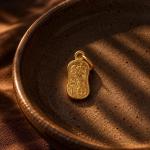
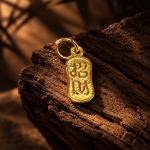
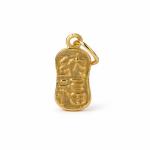
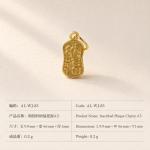
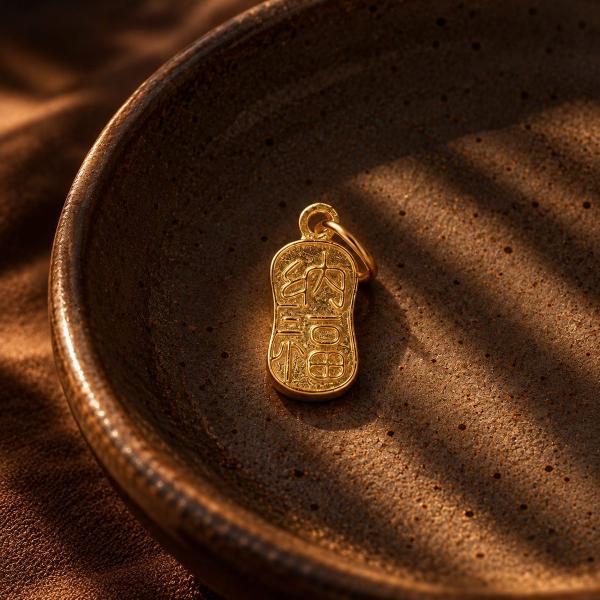
The little drop is a coin-shaped pendant in white copper, the inscription set the traditional way, one character above, below, left and right. The body is not thick, and a raised rim runs around the edge, a ridge you can feel. There are two rims, the outer one taking the wear and the inner one holding the cord away from the face so the characters do not rub away. Four characters can be read in sequence or spiralling; this one is set to be read in sequence.
It hangs anywhere: the end of a bracelet, a bag, a key ring. The coin form is light, so a fine chain will not stretch out of shape under it. The hole is the coin's own square hole, and the cord should be on the thin side. A thick cord jams in a square hole, and forcing it frays the surface until it parts. On a key ring it will rub against the keys, and keys are harder than copper, so give it a hook of its own.
A coin motif in folk use was never only about money. A coin was hung on a child to press down on misfortune: coinage reaches the spirits and turns away what is harmful. That reading is older than the wealth reading, though few mention it now. Real antique coins are strung by collectors who care about the burial site and the colour of the corrosion; a newly made piece is about the look, so do not buy it as an antique. New coin pendants usually have deeper cuts than old ones, which have been worn for centuries. Some use one as a bookmark weight, clipped over the spine, which works well.
The rim is what a white copper coin piece suffers on. It is the outermost ring, and a knock against a desk corner flattens it, and once flattened the whole piece sits askew. Store it flat, not heaped with keys. When the surface dulls, wipe with a soft cloth; the four corners of the square hole cannot be reached, which is no disfigurement, since corners scrubbed clean look false. The rim takes small nicks most easily, and a nick should not be filed, because filing shows more than the nick did.