


Menu
By theme
By theme


{{ variable.name }} : {{ variable.values[selectedVariantsIndex[variable_index]].name }}
Quantity:
The awakened lion is the southern lion, as Guangdong calls it. The head is built on a bamboo frame, pasted with paper, painted, with a mirror on the forehead, a single horn at the crown, and eyes that open and close. Two dancers work it, one at the head and one at the tail, moving to the drum. For festivals and shop openings, calling in a lion team to pluck the greens is an old southern custom. Southern lion heads divide into civil and martial types: the civil is gentle, the martial fierce, and the painted faces differ. In the plucking, the lion bites at the greens and red packet hung over a doorway, and only when it gets them is the blessing taken.
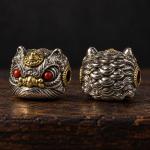
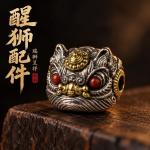
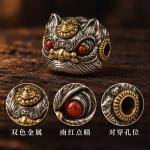
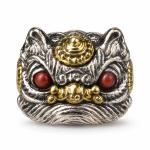
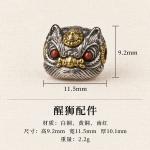
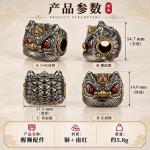
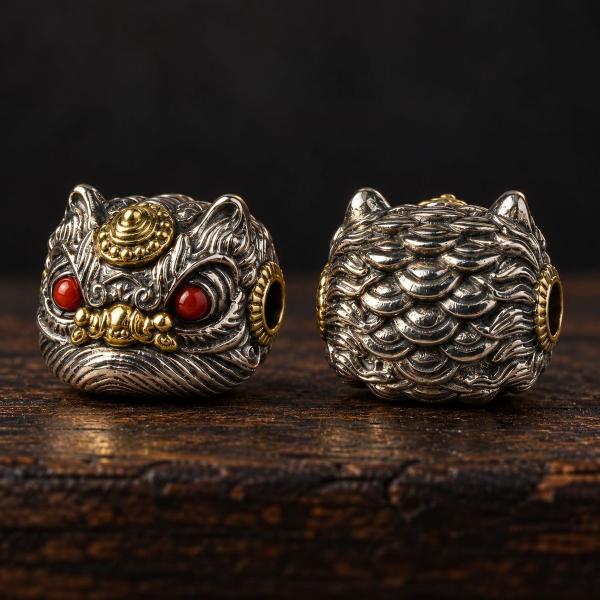
This three-hole bead carries the lion head on the front of the body. The mane curls in rings, the little forehead mirror is reduced to a raised dot, the brows press low, and the eyes are two slits slanting upward. Medium and large differ in bulk, not in bore: the difference is the diameter of the body. The large suits the head position on a wrist string; the medium goes with smaller beads or closes a mala. The mirror on a lion's forehead is there to reveal spirits, since a mirror was said to show a thing's true form.
The painted face of a lion head cannot be reproduced in copper, so this one works through depth of carving alone. Deep hollows hold dirt and go black, shallow ridges catch the light, and the contrast appears by itself with no colour applied. The piece is left unpainted and depends entirely on the cutting: the curls of the mane have to be even, and a small difference in depth makes a large difference under light. Work that relies on light and shadow suffers from over-polishing, because once it is bright the layers flatten out.
The bore is a T: the cross hole takes the main string, the vertical one takes what hangs below. With the large size, mind the thickness of the cord, since two strands jam easily at the T. Pull them through with a leader rather than hauling. A snapped cord scatters beads across the floor and they are a nuisance to find, so singe the end before threading. If the inner corner of the T is too sharp the cord bends sharply there and breaks soonest at that point. Once strung, turn the bead and check whether the mouth of the hole scrapes the cord.
A copper bead pressed against its neighbours will polish bright where they meet, which is normal. The lion's horn is the sharpest point and takes knocks, so wrap the piece in soft cloth for storage. White copper does not fear water; it fears water left in a seam. Dry it thoroughly after washing, especially the curls of the mane, where water is slowest to leave. And a white copper lion head does not survive a fall: the horn lands first, and a bent horn throws the whole piece off.