


Menu
By theme
By theme



{{ variable.name }} : {{ variable.values[selectedVariantsIndex[variable_index]].name }}
Quantity:
The garuda is called Garuda in the sutras, and it is one of the eight classes of beings. It comes first among them, takes the form of a bird with an enormous wingspan, and feeds on nagas. Naga means dragon, which is why Tibetan images often show the garuda with a snake in its beak and the body coiled around its claws. That detail is how you know it.
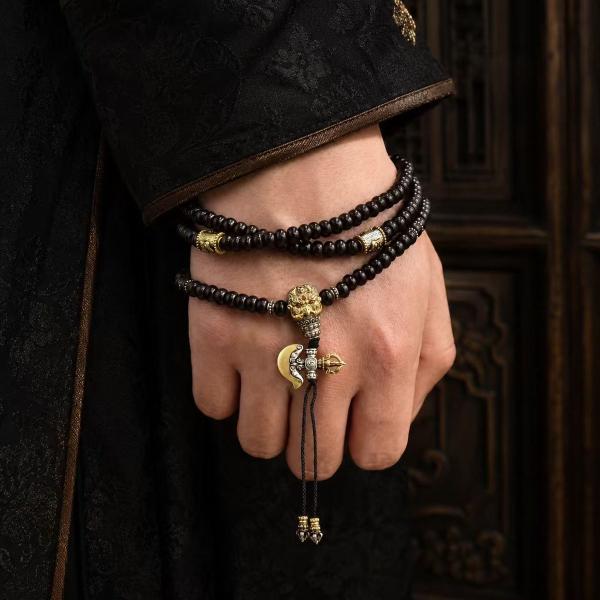
A garuda on a three-hole bead is a cramped brief. The bird wants to spread its wings and the tips want to go outward, but the face of the bead is not wide enough. So the wings are folded into a closed posture, or the tips are carried around the curve onto the side facets. Both solutions cost something. Folded looks confined. Carried around the side leaves only a body when seen from the front. This one takes the second route: head, chest and claws face you, the wings wrap onto the side facets, and the whole bird appears when you turn the piece.
The word vajra is a second layer on top. A vajra motif usually sits at the top or the bottom of the three-hole bead as a border, a short horizontal vajra with the prong tips showing at either end. Garuda with vajra is a pairing of movement and stillness. The bird moves, the vajra does not, and the vajra holds the bird down so the piece does not float away. When you look at it, look at the bird's head first, then at the prong tips. If the two are at the same level of finish, they came out of one mould rather than being assembled from parts.
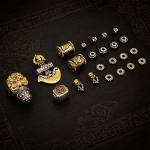
A set means there are fittings besides the three-hole bead, so a whole strand can be strung without hunting around for pieces. The holes have to agree. The three-hole bead is drilled three ways and the matching stupa piece is drilled straight through, and if the angle where the two meet is wrong the strand sits crooked. That is the real advantage of a set. The holes were cut for each other, and nothing needs trying out. Buying loose pieces separately usually takes two or three attempts before it sits right.
When white copper is antiqued the feathers take the dark best. They are layered, with a shallow channel between each layer, and the dark sits in the channel so the feathers separate. Polished white copper on feather work blurs nine times out of ten. Tilt the piece against the light when it arrives, and if you can count the layers, the work is there. The claws gripping the snake are the finest part and should not be bent, so keep cord away from that point. Do not store it heaped in with other metal. The wing edges are thin, and one press leaves a crease in them.