


Menu
By theme
By theme






{{ variable.name }} : {{ variable.values[selectedVariantsIndex[variable_index]].name }}
Quantity:
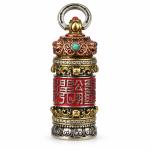
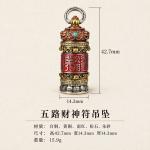
A cylinder, the same diameter top and bottom, both ends levelled off. The characters run around the body, one line after another, and a single turn is not enough to read them; you keep turning. They stand upright, tops toward the top edge, and as the cylinder turns they travel with it like a seal that rotates. The hole runs from the upper end through to the lower, straight along the axis. The middle of the body is a little thicker and the two ends a hair thinner, and that slight waist lets the characters space out more evenly.
Seal script strokes are even in width with rounded turns, without the sharp tips and paused strokes of regular script, which is what suits wrapping a text around a cylinder. Written on a flat surface, seal characters are square blocks; carried onto a curved face the blocks bend with the surface and the horizontal strokes arch slightly. Each character had to be laid out along the arc before the graver went in, or the joins would have stepped out of line. Spacing is a matter of arithmetic: how many characters fit in one circuit depends on the circumference, and that sets the size of the lettering.
Because the hole goes right through, the cord enters at the top and leaves at the bottom, and the pendant lies across it without flipping over. Some people thread a fine cord in from both ends and knot it so the cylinder hangs upright. Hung that way it finds its own vertical, rolls against the chest as you walk, and feels cool. A through hole makes restringing easy; the cost is that the rim of the hole works at the cord. The wall is polished, the cord slides in it without drag, and a single pull brings it out when you change the cord.
A cylinder fills the hand more than a flat plaque: at the same size, the weight is more concentrated. On a cord at the neck the pull is obvious, and under thin cloth it shows as a lump. It does not work with a shirt, where it makes a bulge beneath the cloth; it does work with a crew neck or a coarse knit, lying against the surface so the shape reads well. Both ends are flat, so it stands on end and rolls when laid down. Put a small bead at the mouth of the hole so the cylinder does not rub the cord directly.
The characters are recessed to an even depth, and a fingertip finds each one. The hollows darken, the raised strokes polish bright, and the writing lifts off the surface by itself. That contrast comes from ordinary handling, and no artificial ageing is needed. Wipe along the length of the body, not across it; a crosswise rub pulls the dark out of the cuts and leaves the characters faint. The middle band is the brightest part from the fingers, and that band of light is simply wear.