


Menu
By theme
By theme


{{ variable.name }} : {{ variable.values[selectedVariantsIndex[variable_index]].name }}
Quantity:
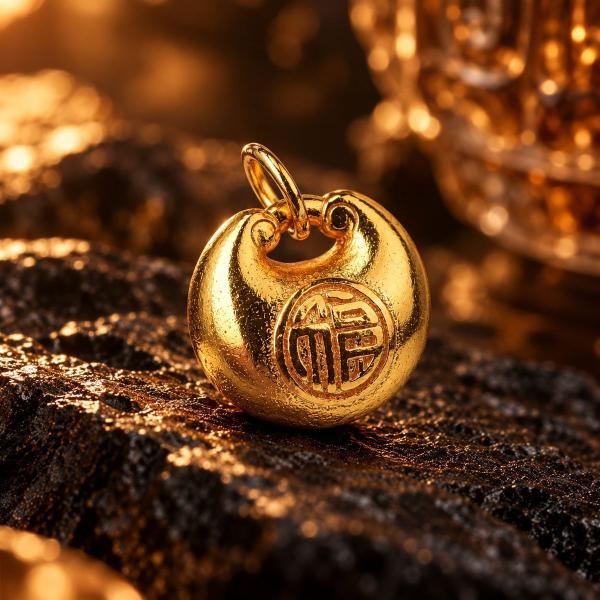
A lock-shaped piece hung on a child is called a long-life lock, and the idea behind it is to lock a life in place. Silver was the usual metal in older times, and a household that could afford a silver lock was doing well; copper was used too, being lighter and no drag on a child's neck. The face was cut with fu, with shou, with the words for long life, wealth and honour, and the more characters there were the livelier it looked. The object began as something for children, and adults later wore it as well, so the meaning shifted from guarding a life to remembering one. A small hole sits at each side, once used for a chain and now mostly left empty. The bow-string lines on the back are pressed rather than cut, and a different hand made them from the one that cut the front.
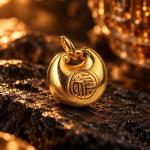
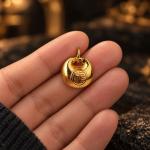
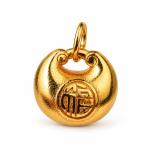
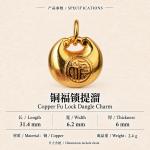
The lock is wide at the top, narrows toward the bottom, curves in at the sides and drops to a small point, which is the old long-life outline. The front carries a single fu in seal script, its strokes winding back and forth and taking up most of the face; the back is plain but for one bow-string line pressed along the edge. The bar at the top is drilled, the cord passes through, and the lock hangs crosswise. The right side of the fu is written open, a mouth pressed in under the horizontal, and the foot of the character reaches the lower edge of the lock.
There are several seal-script ways of writing fu. This one puts the shi radical on the left and, on the right, a horizontal over a mouth, with the strokes drawn long and the tail drooping downward. Seal script insists on evenness: a stroke keeps the same weight from start to finish, turns are round, and there is none of the pause that regular script makes. Cut into copper, the graver has to slow at every turn; hurry it and a corner appears. Seal-script fu and regular-script fu look nothing alike, and plenty of people cannot read the seal form until it is pointed out to them.
Used as a dangle, it will hang anywhere: a bag, a mala, a set of car keys, even the post of a bed. The lock lies crosswise, so it swings from side to side, and the two points tap audibly when they meet a hard surface. For a child, keep the cord short and do not let it hang where it can be bitten. For an adult's bag, choose a thinner cord; the lock has weight of its own and a thick cord makes it look clumsy. Thin fabric will not carry it, and canvas does better.
The two points are the thinnest part of the casting, and one drop can bend them. Do not straighten a bent point with pliers: copper springs back, and bending it past the mark cracks it. The strokes of the fu are close together and dust settles between them; brush it out dry rather than wetting the piece. White copper greys with long hanging, though the flat face is easy enough to wipe. That face is also large, and one pocket shared with keys will leave a scratch at the first contact.