


Menu
By theme
By theme






{{ variable.name }} : {{ variable.values[selectedVariantsIndex[variable_index]].name }}
Quantity:
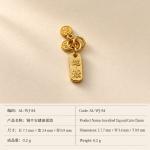
The character pattern fills the entire face, rows set close both across and down, one against the next with no blank space left. The characters are small and the strokes fine; from a distance it reads as a texture, and only close up do the characters come out. A narrow border runs around the edge and holds the dense field in, without which the whole piece would fall apart. The hole is at the top, and the border continues around it. The border is raised a hair above the characters, so a knock lands on the frame first.
A pattern of this kind takes the shapes of characters and does not necessarily join them into a sentence. The layout was made by pulling strokes apart and setting them down again, with the spacing adjusted to suit the design, and it often does not read as text at all. Old brocade, brick and the backs of bronze mirrors all use this arrangement: the characters are ornament, and being unable to read them does not get in the way of looking. If the content does matter to you, choose a scripture plaque that runs a text straight through instead. The same hand might also reverse a character or turn it upside down to fill the design more completely.
The dangle goes at the tail of a mala or on a bag strap. It is quieter than a bell and tidier than a tassel, which suits anyone who does not want a sound following them. The hole is small and the cord has to be fine; a thick cord will not pass, and forcing one through distorts the border around the hole. Once hung, it lies against the neighbouring beads and the character face wears, with the wear running from the centre outward. People who already carry several charms often leave this position empty, and a plain bead there lets the strand breathe.
On a small piece worked this densely, the difficulty is the plate. A hairline of ground has to be left between one character and the next: too wide and the characters float apart, too narrow and the melt cannot pass, so they run together. Here the cuts are open, and a few strokes have joined, which is what dense setting inevitably produces and not a fault. The back was cut shallower, since the back is seldom seen. Small as the piece is, the plate had to be cut on both faces, and the work is no less than on a large plaque.
The cuts are shallow and wear quickly. A month in a pocket with keys and coins will flatten the outermost characters. If you want to keep them, carry the piece in its own bag. Clean it only with a dry brush; water makes the dark in the cuts bleed and leaves the characters less legible than before. Once the surface of the white copper polishes bright, the contrast between character and ground weakens, which is the common trouble with small pieces of this kind. The edges are the first thing a cord rounds off, and once they are round the border no longer stands crisp.