


Menu
By theme
By theme

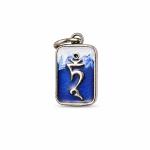
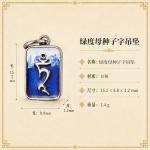
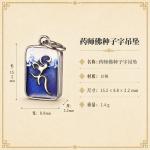
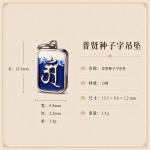
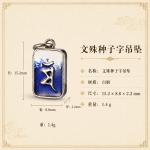
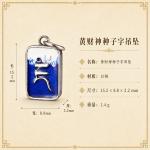
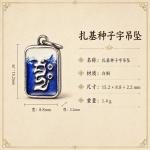
{{ variable.name }} : {{ variable.values[selectedVariantsIndex[variable_index]].name }}
Quantity:
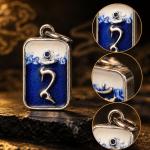
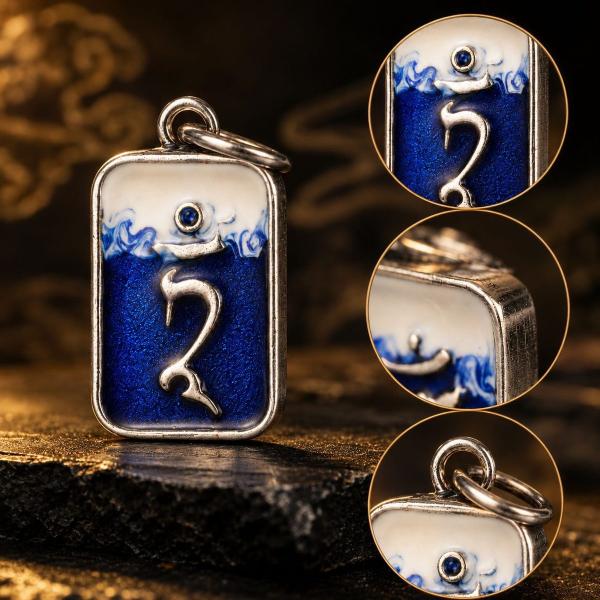
A seed syllable is not a letter written at random. In esoteric Buddhism a single Sanskrit letter stands in for a particular deity, and that letter is the seed. The way it is written has a lineage behind it, most often in Ranjana or Uchen script. To someone who does not read it, it looks like ornament; to someone who does, the deity is recognisable at a glance. That is what makes it hold the eye longer than a general auspicious motif: the information sits inside the strokes, quietly, and only shows itself up close.
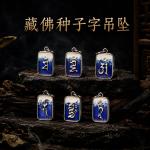
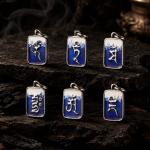
Six are offered here: Zaki Lhamo, Samantabhadra, Yellow Jambhala, Green Tara, Medicine Buddha and Manjushri. Choose by the deity you want, not by which looks best. Zaki Lhamo is a local protector much worshipped around Lhasa with a strong folk following; Yellow Jambhala belongs to the five Jambhalas and has fixed attributes in his hands; Green Tara is a Tibetan Buddhist figure, while Manjushri, Samantabhadra and Medicine Buddha are common to both the Chinese and Tibetan traditions, each with their own identifiers. If you are not sure, give the name of the deity rather than the picture number, because the numbers change.
The base is white copper, and the cutting of the lettering is what this piece is really about. Seed syllables have fine strokes and many turns, so a mould that is slightly out will blur them into each other; the depth of the lettering tests the workmanship more than the motif does. White copper is hard enough that thin strokes do not wear flat, and after a year or so of wear the beginning and end of each stroke can still be read, which is less of a worry than with many softer materials. If the edges of the strokes carry no burrs, the mould was cleaned up properly, and that is a detail no one can fake.
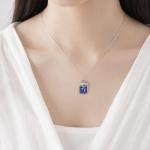
It is not a large piece, and a short chain puts it at the middle of the collarbone. A high neckline hides the letter; a wide scoop neck leaves it stranded; a finger's width of room at the neckline is about right. Some people layer it with a plain small tag, one dense and one sparse, which gives more depth than wearing it alone. Too long a chain drops it to the stomach and the proportions scatter, since the pendant is small. Either sex can wear it, and a thicker chain makes it read more unisex.
After a while the lettering darkens first, which looks like a deliberate aged finish and is not a fault. If it bothers you, wipe along the strokes with a soft cloth rather than toothpaste, whose abrasive lodges in the fine lines and leaves them cloudier than before. Anyone sensitive to nickel should be careful about wearing it against the neck, and in sweaty weather a collar in between helps. Store it in its own small bag rather than loose with hard objects. The back is usually flat and left plain, so the side against the skin does not rub, even in summer.