


Menu
By theme
By theme




{{ variable.name }} : {{ variable.values[selectedVariantsIndex[variable_index]].name }}
Quantity:
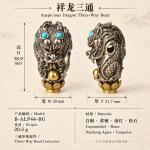
Where a strand reaches the point where it has to turn, the piece used is the three-hole bead, and it is the fork in the road for the whole strand. The beads arrive here and have to split into one going up and two going down, so it needs three bores meeting in a T. The place where they meet inside is the hardest part to make. Drill slightly off and the three lines no longer lie in one plane, and the strand twists when it is strung. The bores are not drilled straight through: a main bore first, then two more cut on the slant from the side, with room left at the junction for the cord to bend.
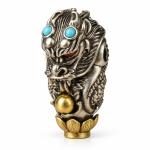
Dragon and lotus share one piece, one from the water and one on the water. The dragon pattern appears very early on folk objects, and by the Ming and Qing almost anything could carry one coiled around it; the lotus is earlier still, and after Buddhism arrived it became a sign of purity. Buddhas and bodhisattvas all sit on lotuses, since the lotus is a seat in Buddhist practice, and that is why lotus pattern on ritual objects usually sits at the bottom, holding up whatever is above it. Putting the two together is not unusual. What is hard is the proportion: the dragon body wraps around, the lotus supports from below, and which of them is larger sets the tone of the whole piece.
White copper, with an aged finish. The scales are pressed one at a time, each left with a shallow step at its edge, so the fingers feel a grain. The lotus petals are thick, the tips lifted slightly, arranged in a ring. The aging is laid only into the recesses, while the high points of the dragon body stay bright; a piece carrying both light and dark does not sit dull. Aged white copper goes grey rather than black, and against dark beads it looks clean. A deeper color means moving to brass.
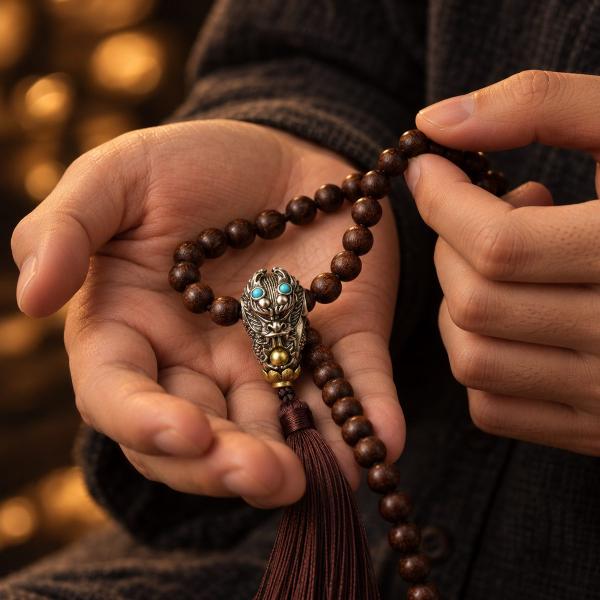
Above the three-hole bead usually goes the Buddha-head tower, its flared mouth facing down to gather the three cords. Reverse the order and the strand bulges into a lump. The cool tone of white copper agrees with dark materials, and coconut shell, ebony and lapis all hold their own against it; paired with warm colors such as South Red agate or amber, spacer discs are needed to transition, or the two colors fight. The tower is also called the three-hole tower: the body is bored through, three cords enter at the base and merge into one at the top.
The bores meet at a right angle, and that is where the cord bends hardest. Use multi-ply cord rather than elastic, because when something breaks it breaks at the right angle first. Ply cord takes repeated bending; the drawback is that you knot it yourself, and the knot belongs inside the bore, not outside. Every so often take the strand apart and look at the cord. If it has gone fuzzy, replace it, rather than waiting for it to snap and scatter the beads.