


Menu
By theme
By theme




{{ variable.name }} : {{ variable.values[selectedVariantsIndex[variable_index]].name }}
Quantity:
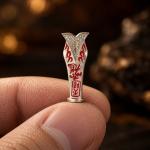
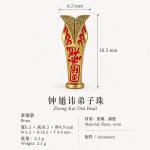
Disciple beads hang at the tail of a strand. Once the strand closes, a few small beads dangle below it and click softly against each other as you walk. Old strands cared about this, and the beads are called jizi, or disciple beads. They carry no load and are purely a finishing ornament, which is why they are freer than the main beads and can take any shape. The number is not fixed: two, three and five are all seen, more feels cluttered and a single one looks lonely. The bore is drilled vertically, the cord runs through the middle, and one bead follows another.
Zhong Kui is a figure out of legend. Notes from the Tang say he sat the military examination, failed, struck the steps and died; later Emperor Xuanzong, laid up by illness, dreamed of a great ghost catching a small one, woke, and had Wu Daozi paint what he had seen, and that is the image of Zhong Kui. Whether the story holds or not, the painted type is fixed: leopard head, ring eyes, iron face, curly beard, a red robe, a ghost gripped in one hand. He has a second folk use, hung as a picture at the Dragon Boat Festival together with mugwort, for the purpose of driving off evil.
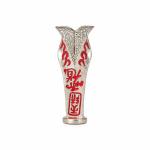
What is cut into the tablet is not the name but the taboo form of it. Daoism makes a dedicated character for each deity, stroke stacked on stroke, unpronounceable, written only on talismans. Zhong Kui's tablet usually compresses the two characters of his name into a single talismanic shape, with a rain radical set on top. Being unable to read it is normal, since it was never meant to be read. The position of a taboo character on a talisman follows fixed rules, and writing it at the head or in the belly of the talisman does different work; a tablet takes only the one character, so none of that comes into play.
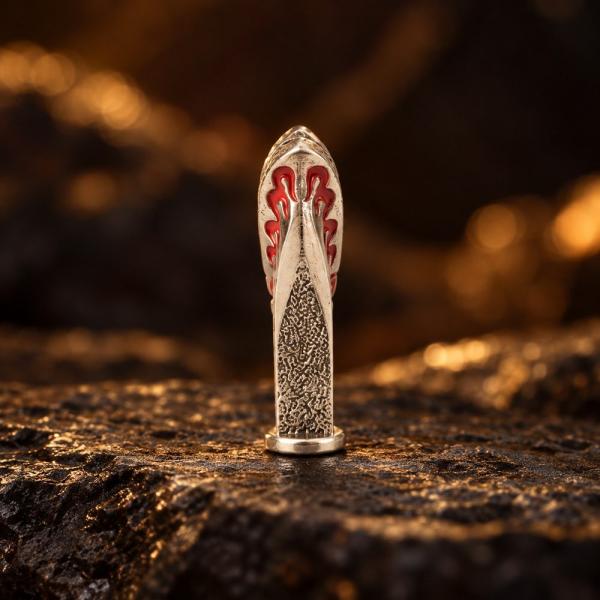
Two colors, white copper and brass. White copper is clean and does not clash with a silver chain or white jade; brass is warm and sits closer to leather cord, old material and amber. Used as disciple beads they usually come in pairs, one hanging on each side with a small spacer between them. A single one also works, hung under the Buddha head as a pendant, though that is no longer the disciple-bead position. Disciple beads hang on the outer side of the wrist and knock the desk when you type, so anyone bothered by the noise goes with a single bead.
Small pieces get lost. Leave the cord end a little long when stringing, tie a hard knot and burn it, and do not leave a long tail hanging. When the copper dulls, press it with a cloth. The taboo strokes are densely packed, so do not pick at the recesses; picking raises burrs that feel sharp to the touch. When you are not wearing it, leave it on the strand. Take it off and set it down on its own and that is the step where most of them go missing.