


Menu
By theme
By theme







{{ variable.name }} : {{ variable.values[selectedVariantsIndex[variable_index]].name }}
Quantity:
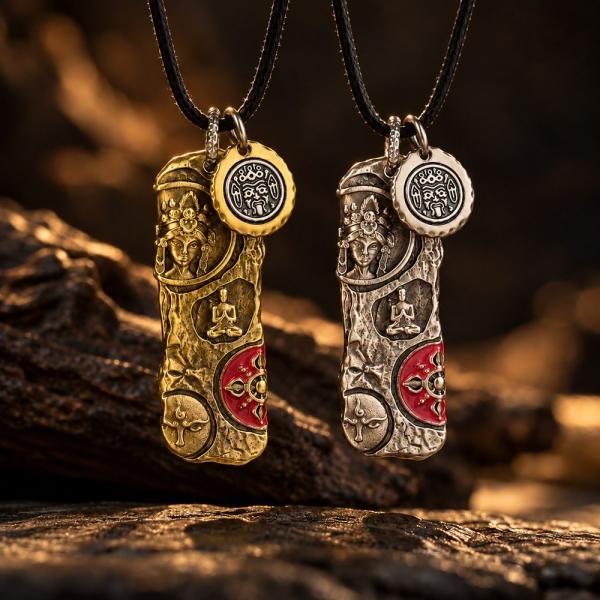
Zhaji Lhamo is the deity enshrined at Zhaji Temple on the northern edge of Lhasa. Her image does not belong to the same line as the Han Chinese gods of wealth: the face is black, the tongue comes out, a crown sits on the head and the eyes stare wide. Tibetans who go to Zhaji Temple are mostly asking for something to be settled, and the place smells of liquor all year because the offering is barley wine. Visitors bring a bottle with them, and the custom has never lapsed. Tibetan goddess images mostly wear crowns, the leaves of the crown pressed one over another, and it is on that detail that the workmanship shows.
Enamel means a glassy glaze packed into channels cut in metal and then fired. One firing is not enough. The colors go on layer by layer, and every firing may crack the work or shrink it, so the reject rate runs high. The fired surface has a glass sheen and feels cool under the finger, nothing at all like paint. The enameled area and the copper area each take a share of the surface, so a single piece carries two textures. Fired blue and enamel are close relatives, both cutting channels in copper and filling them with glaze, and the difference lies in the glaze recipe and the number of firings. Cut the channel shallow and the glaze cannot go on thick, and only then does the color come out translucent.
Two base metals. Brass under enamel is warm and the colors hold their own; white copper is a cold ground and the colors jump out brighter against it. Which one to take depends on your clothes: dark tones go clean with white copper, beige and camel sit right with brass. The white copper ground is harder and does not sag in the kiln, so its channels can be cut finer. The glaze shrinks as it fires, so it goes in slightly above the mouth of the channel and comes level once it has cooled.
An enamel face fears a knock. Chip off a piece of glaze and there is no repair, only a complete refiring. Keep it clear of hard objects while wearing and do not hang it on the same ring as keys. It sits at the chest with the enamel facing out, and hands do not reach it often, so most of the wear comes from rubbing against clothing, which cannot be helped. The face dislikes perfume; one spray of alcohol and the sheen goes cloudy, so spray around it rather than on it. Better worn outside a sweater than against the skin, where the enamel does not take sweat directly.
Enamel does not need oil. Oil seeps into the seam between glaze and copper and blackens with time. A press with a dry cloth is enough, and a soft brush for the dust in the seams. Take it off before a shower, since hot water and soap are hard on glaze. Do not leave an enamel piece on a windowsill, because sun fades red and blue first. The tiny pinholes in a glazed face are left by the firing, not cracks, and they should be left alone.