


Menu
By theme
By theme

{{ variable.name }} : {{ variable.values[selectedVariantsIndex[variable_index]].name }}
Quantity:
Plenty of shops sell pixiu, and not many of them can say where it comes from. The pixiu is a beast of legend. In the earliest records it is listed alongside tigers and leopards, among the fierce animals, and the Records of the Grand Historian names the troops of a bold general pixiu warriors, taking the sense of courage. Later folk practice gave it a power: a mouth and no vent, so what goes in does not come out, and it became a symbol for gathering wealth. That idea took shape very late, only popular from the Ming and Qing, and has nothing to do with the original in the old texts. Knowing this before you buy keeps your expectations steady. Those who know the beast look at the mouth, those who do not look at the liveliness, and neither way of buying is wrong.
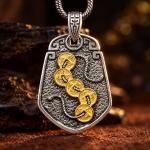
A plaque differs from a pendant in thickness and in where the hole sits. A plaque is thin and wide with the hole at the top center, so on a cord it lies flat against the body and does not flip; a pendant is thick and three-dimensional and turns as it hangs. The advantage of a plaque is that a design can spread out, and a beast in profile like the pixiu only shows in full when it is spread flat. Thin has its price: relief cannot go deep, the design has to be simple, and dense detail goes flat.
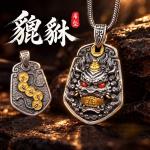
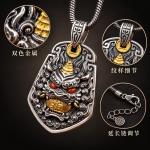
In traditional work the pixiu mostly lies couchant with the head forward, one horn or two, and the approach differs from one region to the next. The identifying points are the lion body, the horn and the big mouth, and those have to be kept or it cannot be told apart from a lion or a qilin. The one-horned is generally called tianlu and the two-horned bixie, which is the old usage, though names vary locally. The big mouth is its mark: on old pieces the mouth could hold a copper coin. In a small piece the four feet are tucked under the body, taking no space and less likely to take a knock.
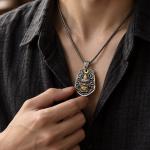
Single, or with a chain. A plaque lies against the chest and covers area, so through thin summer clothing it prints a shape. Once you sweat, the copper sticks to the skin and you have to lift it every few steps. If that bothers you, take the chain version and wear it higher, just under the collarbone, where the mark is not obvious. Choose a fine chain, since the plaque is thin and a heavy chain overpowers it. The chain on the chained version is a fixed length: short and it will not go over the head, long and it wraps twice.
The front of the plaque is relief and the back is flat, and the flat side is the one against the skin, where the sweat is. Dry the back after wearing and do not let sweat sit there. A flat back also takes fingerprints easily, so run the cloth over it while you are at it rather than letting a layer build up. When the copper dulls, press it with cloth, and use a soft brush for the dust in the recesses. Do not put it straight back on after wiping; give the copper a moment to dry.