


Menu
By theme
By theme






{{ variable.name }} : {{ variable.values[selectedVariantsIndex[variable_index]].name }}
Quantity:
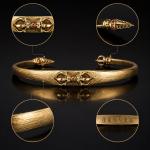
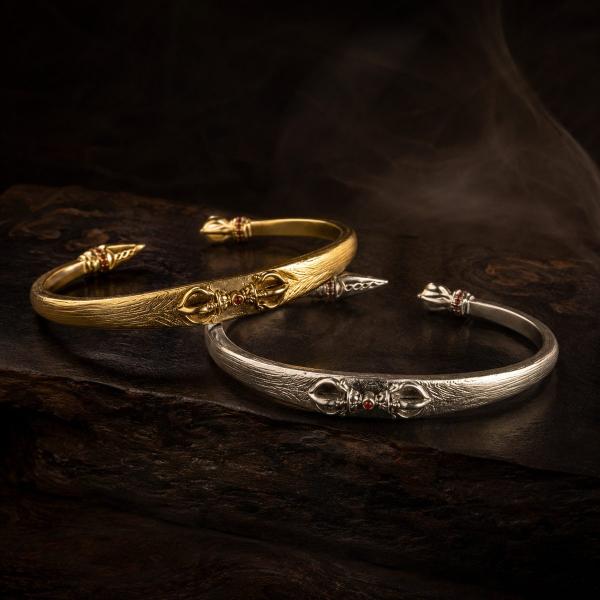
Three colours in front of you, and the instinct is to reach for the brightest. Hold off. The polished yellow is close to gold and throws a lot of light, so it suits slim wrists and pale skin. The silver version is nearer the natural tone of white copper, cool, and sits well with denim, grey and black. The plain yellow is the heaviest looking of the three, close to an old brass piece, and works best with dark tones and chunky knitwear. There is no ranking among them; just count which tones fill your wardrobe.
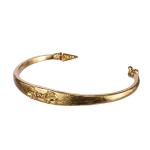
The vajra is coiled into a bangle with the heads meeting at the opening, a structure that both closes the pattern and leaves room for adjustment. The advantage of an open bangle is that you do not have to match a fixed circumference, so a broader wrist bone still passes through. The cost is that the gap catches knitwear and scarves, and turning it to the inner wrist when dressing saves a lot of annoyance. Do not force the joined heads apart; that is the most highly stressed point on the whole bangle. The body is wide, so on a slim wrist it will rotate.
Copper behaves differently from white copper. It is warmer and oxidises faster: on a sweaty hand you can see the change within a week or two, dulling first and then turning a thin brown, which is what people mean by patina. A polished surface looks showy at first, and better once that layer has worn. Anyone who wants a permanently new look should be prepared for the fact that this will not stay bright, and that keeping it bright means polishing often.
The vajra body is three-dimensional, with ridged edges that make themselves felt against the wrist bone. For a first bangle, choose a looser fit with a finger's clearance, so it does not pinch when hands swell in summer. Wear it apart from a watch, because metal on metal leaves fine scratches, especially against a polished case. It is heavy, so typing will knock the wrist against the desk; take it off at the desk. If the two ends of the opening have not been rounded, they will scrape the inner wrist.
Wash it with a soft cloth and a little mild soap, dry it, then put it away. Do not soak it: water sits in the gap at the opening and verdigris starts from there. If it goes unworn for a long stretch, seal it in a bag with limited air and the colour will settle. Of the three, the plain yellow hides dirt best, since neither scratches nor oxidation show much. If a fine crack appears at the opening, stop bending it and have a jeweller solder it. Whether the inner face is smoothly rounded decides how comfortable it is over years, and no photograph can answer that.