


Menu
By theme
By theme


{{ variable.name }} : {{ variable.values[selectedVariantsIndex[variable_index]].name }}
Quantity:
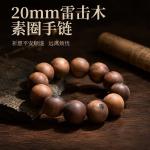
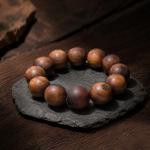
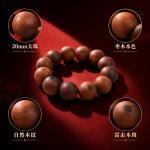
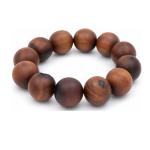
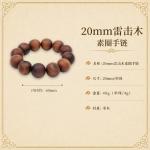
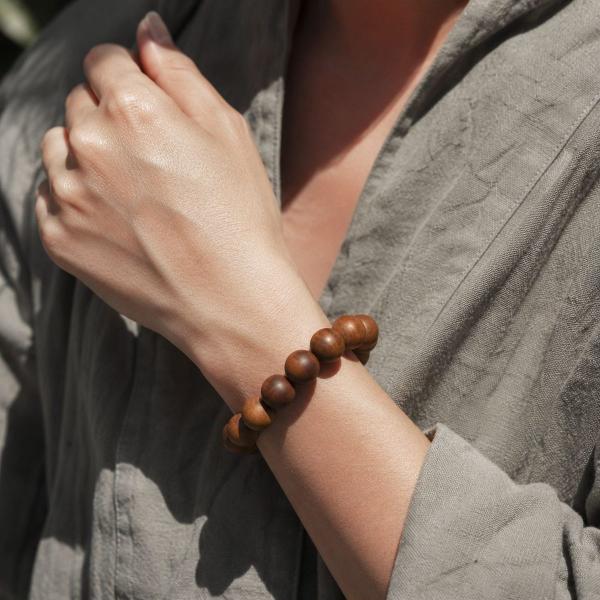
A 20 mm bead has presence on the wrist — one of them is worth two small ones. Bigger beads mean fewer of them, a dozen or so to a loop, and this strand is plain: no spacers, no guru bead, nothing but round beads, which reads clean. It suits men. A slender wrist will find it loose, and that looseness is the beads holding space, not the cord being long. Roundness is turned on a lathe and checked bead by bead with calipers; anything off-round is sorted out.
Jujube grows everywhere in the north. The wood is hard and dense, the grain so fine it is nearly invisible. Old jujube darkens and sometimes carries black streaks; sawn and left for a few years it settles and stops moving, which is why it went into rolling pins, plane bodies and abacus frames that last decades without warping. A bracelet uses it for wear resistance and low maintenance. New wood is yellowish, old wood reddish, and a single batch will vary in tone; lay a strand out and the range is plain to see.
Don't wear new beads straight away. Rub them with cotton cloth for a month to take off the wood dust and wax, and the beads begin to shine on their own, and that slow start is the point. Hands that sweat darken them unevenly, and those streaks don't wash out. Jujube dislikes dryness: keep it away from radiators in winter and out of direct sun, because a crack starts as a fine line at the end grain and cannot be closed afterwards. Handle with clean hands — not straight after eating, since oil and salt both sink into the wood.
The plain strand is strung on cord, and cord is a consumable. Replace it yourself and keep the beads. A 20 mm bead knocks audibly on a desk, and if you write with your wrist resting on the edge, the beads press and dig; taking the bracelet off is easier. Store it in a cloth bag rather than loose with metal, whose hard edges dent wood. When restringing, put the beads back in their original order and keep the wider holes facing the same way; the strand hangs better for it.
Lightning-struck wood is a folk term for a tree that lightning hit, and one that survived the strike is valued more. Genuine pieces are scarce. The market has scorched, buried and dyed material, which also comes out black and cracked, and a non-expert can't tell the difference. Reading the grain and weighing the piece is more reliable than trusting the name: if the charred tone in the grain sits only on the surface and sands off, it was probably burned. With this kind of thing, don't trust a guarantee that it was struck — nobody can prove it. Judge the wood itself — its weight, its grain, the way it takes a polish — and let the story go.