


Menu
By theme
By theme



{{ variable.name }} : {{ variable.values[selectedVariantsIndex[variable_index]].name }}
Quantity:
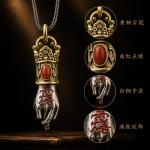
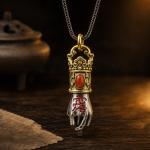
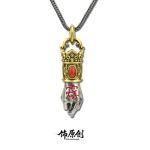
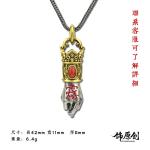
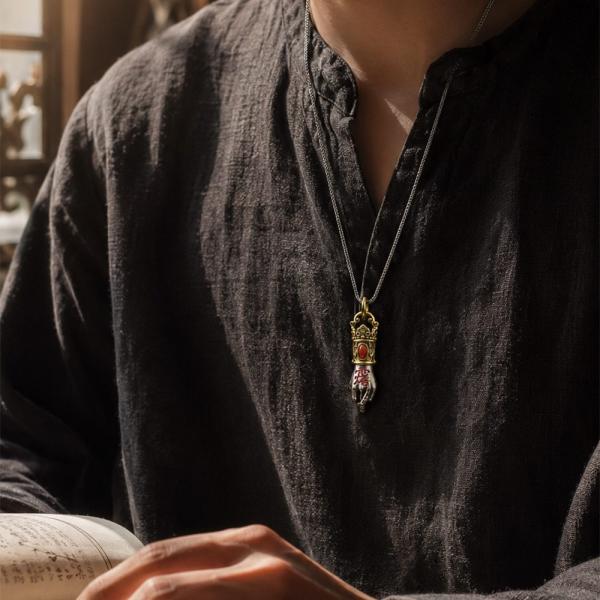
The sword gesture is common in Daoist ritual: index and middle fingers extended together, thumb pressing the knuckles of the ring and little fingers, palm facing out. Made into a pendant, the outline of the hand is pressed into a narrow plaque — two extended fingers pointing down, the other three folded — so the front reads as a slim vertical shape. The hard part of putting a gesture into a plaque is finger proportion: too long and it looks like a branch, too short and it looks like a brick.
Southern red is one variety of agate. The standard colors are persimmon and cherry; good material has a gel quality, so light entering it looks glutinous rather than transparent. Fine cinnabar dots are common inside, speck by speck, as if they had been scattered in. It is opaque, and darker pieces feel heavier in the hand while pale ones lean pink; tastes differ. The red runs from deep to light, and a single piece can show the transition. Hold a torch behind it and the dots show as a fine screen; material with dense dots reads deeper in color.
Southern red is hard but brittle. Drop it on tile and a chip comes off, shell-shaped and unmistakable. Be careful of desk corners while working, and take the pendant off before moving furniture. The plaque is narrow and the cord passes through a hole at the top; a small bead at the mouth is worth adding as a stop, since a knot rubbing directly on stone wears a groove into the hole over time. The hole is small, so use a fine cord — a thick one bunches at the opening.
Two options: a necklace with chain and cord, or the pendant alone. The pendant alone suits anyone who already has a cord, and a dark cord sets off the red. Southern red dislikes sun; left in direct light for long stretches it loses moisture, dries out and goes flat in tone. Store it in a bag in a drawer when it's off, and take it out now and then for a wipe with a soft cloth. It doesn't need oil — oil looks good for a day and then attracts dust, and the stone only gets duller. A soft cloth is all it asks for.
In the world of collectible beads, a counter is a small piece clipped onto a mala to keep count, marking whichever bead you have reached. Later people began taking them off and wearing them as pendants; the shape is narrow and long, and it takes up little room. This piece borrows the counter's shape and renders it as the sword gesture, so the two things meet. A counter is meant to clip rather than to thread, which leaves the cord undamaged and makes it easy to take off.