


Menu
By theme
By theme






{{ variable.name }} : {{ variable.values[selectedVariantsIndex[variable_index]].name }}
Quantity:
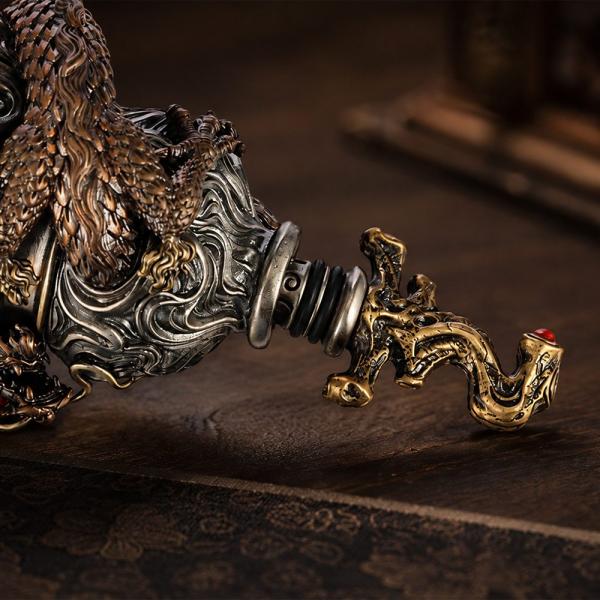
A gourd is two spheres with a waist pinched between them, a small mouth and a round base. As a display piece the first requirement is a flat base: an uneven base won't stand, and the piece always looks about to topple. This one's base is cut true — push it on a desk and it doesn't move — and the lip is given a thick edge that won't cut. Height and belly diameter keep a rough proportion: taller looks lean, shorter looks stout, and display pieces favor stout. The waist line has to be level; tilt it and the whole piece looks slack. The weight sits low, which is what keeps it upright.
The gourd puns on fu lu, blessing and salary, and folk usage treats it as auspicious — one at the door, one by the bed, for the sake of the saying. In Daoism it had practical work: holding medicine, wine, water. Wandering priests tied one at the waist and used it for drinking water and storing elixir on the road. One object, two sets of meaning, depending on where it stands. Old apothecaries kept a row of them behind the counter for pills and powders, handy to reach and proof against damp.
The phrase nourishing a sword comes mostly from legends and novels about sword immortals: a breath of sword energy kept inside the gourd and released when needed. The traditional gourd has no such layer. It is a container. This piece borrows the name for the flavor of the idea, not because anything is actually inside, and that should be clear. The weight of bronze holds it on a desk where a sleeve won't knock it over, which is more than porcelain can claim.
Bronze display pieces are usually cast: a mold first, then the pour, then cooling, filing, polishing and antiquing. Antiquing presses the hollows dark and polishes the highs, so that a few days of work imitates decades. Castings inevitably carry small pits, hidden in the hollow of the waist or on the back of a leaf and invisible unless you look closely. Don't use copper cleaner on an antiqued piece: it takes the aged color with it and leaves raw yellow behind. If you want a bright surface, buy a polished piece rather than fighting an antiqued one.
A desk or a display shelf both work; not a windowsill, where direct sun turns copper pale. Damp spots are no good either — verdigris starts as a ring at the base and comes back after you wipe it away. Dust with a soft brush rather than a damp cloth, which leaves water marks that dry as white rings. The lip is thin and a knock leaves a gap; carry the piece with a hand under the base, not by the mouth. Both hands, one underneath, is the habit worth keeping.