


Menu
By theme
By theme





{{ variable.name }} : {{ variable.values[selectedVariantsIndex[variable_index]].name }}
Quantity:
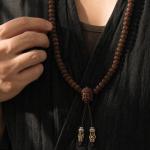
A three-hole bead is inconspicuous within a strand, yet its position is crucial. It has three holes: the main strand passes through from left and right, and a pendant or the disciple beads hang from below, so a straight line turns a corner here and the rhythm of the whole piece is set. Choose the wrong one and no amount of expensive spacers or pendants further down will rescue it. It also fixes which way the pendant faces, since shift the hole and the pendant hangs askew. Check the height of the holes too: set low and the pendant lies flat against the cloth, set high and it rides the collarbone.
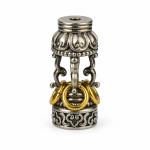
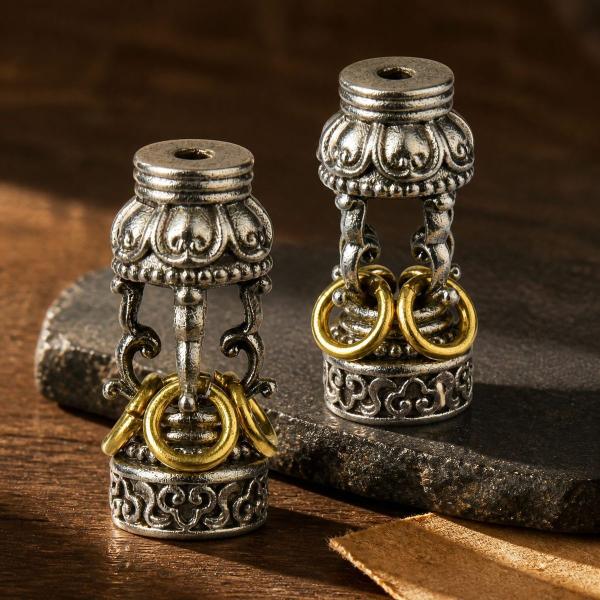
The khakkhara is one of the eighteen possessions of a monk, a staff with rings at the head that strike each other as he walks, originally to warn of insects underfoot so they were not trodden on. In Chinese sculpture Ksitigarbha is often shown holding one, which is why the staff is so widely recognised in folk culture. Shrinking it to a pillar on a three-hole bead means the rings can only be suggested by a few bands, and the balance between detail and simplification has to be judged. The number of rings follows conventions in sculpture, but at this size only the idea can be carried.
Disciple beads are the two small strands hanging below the guru bead, there to count and to finish the piece. They do not carry the length of the main strand; their job is to stop the end from looking abrupt. This set puts the staff, a vajra and disciple beads together, which crowds three kinds of ritual language into one node. That is a lot of information, so be restrained when stringing and resist adding extra spacers. The number of disciple beads is not fixed, and three or five are both common. Leave a little slack in the finishing cord, or the pendant will not swing.
The holes are the vulnerable part of any brass piece. Cast holes often carry burrs that fray and then break the cord, so run a fine abrasive strip round the mouth before use. If the inside feels rough, a touch of wax helps the cord run smoothly and reduces wear. Afterwards wipe the brass dust out of the hole with a dry cloth, because residue will dirty the cord.
Test-fit before assembling. The hole size of the main beads has to match the thickness of the cord: too small and the cord will not pass through the three-hole bead, too large and the beads rattle. Before committing to the final cord, run a scrap piece through to check the tension and the balance of the pendant, then knot and finish, which saves one rebuild. Tie the knot above the pendant and tuck the ends into the hole so nothing shows. Cord frays with use, so replace it when you see the first signs rather than waiting for it to break.