


Menu
By theme
By theme












{{ variable.name }} : {{ variable.values[selectedVariantsIndex[variable_index]].name }}
Quantity:
Spacer beads give a strand its rhythm. A run of identical beads reads dull; set a different material or color between them and the eye has somewhere to land. The spacer also sits between two main beads so they don't grind directly against each other, and the mouths of their holes don't chip. Its own hole has to be true: off center and the strand twists as it is strung, and it only feels more awkward with wear. The mouth should be chamfered, since a hard edge cuts cord. None of this shows once the strand is finished, which is exactly why it matters.
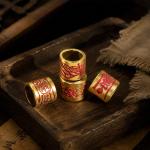
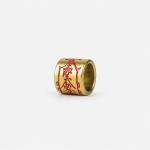
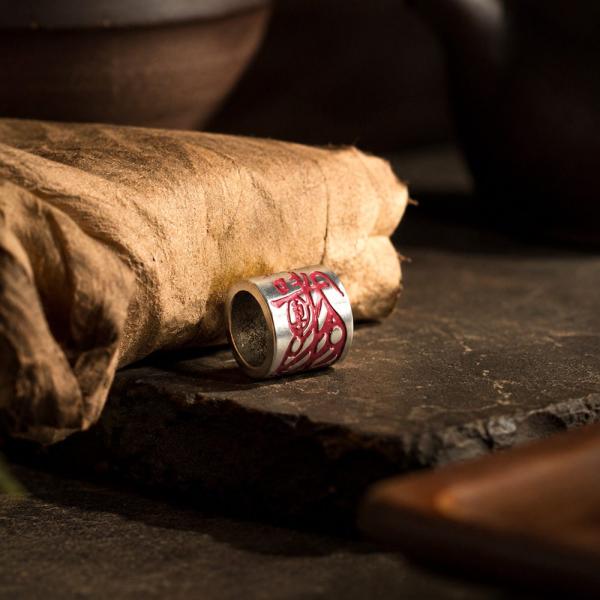
Three patterns, for fortune, peace and protection. All of them are folk good wishes, carved on a bead for the sense of them, promising nothing. Buyers mostly pick by what is in front of them: people in business take fortune, households with elderly parents or small children take peace, and anyone who travels constantly takes protection. The carving is shallow, the relief less than a sheet of paper thick — you can feel it without seeing the height. The three differ in the character at the center; the ring around it is the same on all, so the choice is really a choice of one word.
Spacers usually run one size smaller than the main beads. Larger and they steal the position; smaller and they look like a bead that fell out. White copper spacers work with wood and agate. With silver beads both end up looking grey, and a dark bead in between separates them better. Whether to add thin discs between beads depends on the mouths of the main beads: thin mouths are safer with a leather washer. White copper walls are thin, and coarse cord can split them; check the thickness before committing a heavy strand to a light spacer.
Six combinations: three patterns, each in gold and silver. Gold is bright and good for lifting a strand of dark beads; silver is restrained, and steadier with pale or natural wood. Before buying, count how many spacers your strand needs — usually three or five, odd numbers mostly. Some people buy a few extra to keep on hand. Don't mix gold and silver in one strand; the two color temperatures never settle against each other.
Spacers are small and easy to lose while stringing, so lay a cloth on the table before you start. Copper dulls, and a dry cloth is enough; don't soak it, since water in the hole doesn't dry. When you change the elastic, wipe the spacers and put them back in place, or you will be hunting for them next time. Worn with wooden beads, the hard edge of a copper spacer rubs at the wood's hole, and over time the hole enlarges. A leather washer between them slows it.