


Menu
By theme
By theme


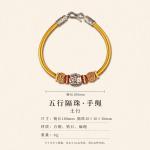
{{ variable.name }} : {{ variable.values[selectedVariantsIndex[variable_index]].name }}
Quantity:
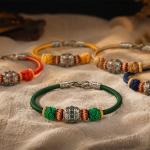
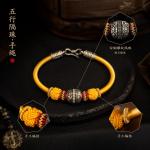
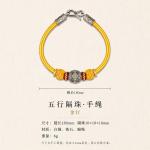
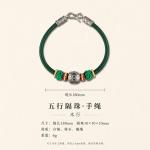
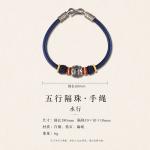
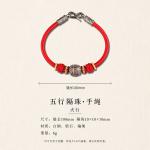
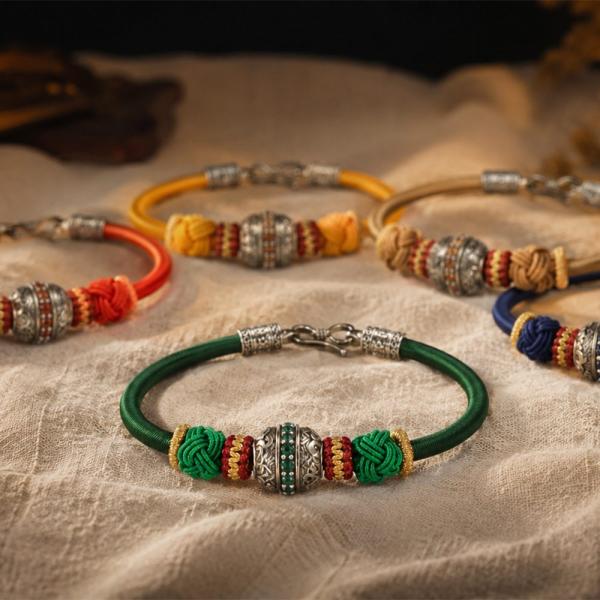
The five elements pair with five colors: wood green, fire red, earth yellow, metal white, water black. That is the most common scheme, and the old books agree on the broad strokes while differing in detail. The bracelets divide by element into five colors, and the names — metal bracelet, wood bracelet — refer to color, not material. The order of the five threads has its own rules, and in some places they run in the generating sequence: green, red, yellow, white, black, one after another. Generating means wood feeds fire, fire feeds earth, earth feeds metal, metal feeds water, and round again.
The vajra knot is a knotted structure: tight, each section locked into the next, and the harder you pull the tighter it holds. It was used early in Tibet and later braided in China under various names. Done well, the intervals between knots are identical and the cord runs in a straight line. Done loosely, it shifts as you wear it, one stretch thick and the next thin. It is slow work — a single bracelet takes a long time — and it cannot be rushed, because speed loosens the knots.
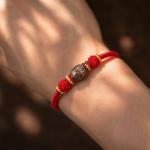
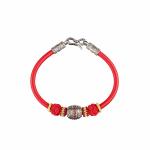
Red cord carries several layers of meaning in folk custom. In your zodiac year you tie red, for the sense of holding something down. At the Dragon Boat Festival you tie five-colored threads at the wrist, then cut them off at the first rain and throw them into a river. These are old customs, done differently from place to place; nowadays most people wear them because they look well, and there is no need to observe every rule. Red cord dulls with wear, the surface fibers lift, the color goes flat, and that is the signal to change it. Tie it without a hard knot, so it comes off easily when the time comes.
How to choose among the five: some pick by whatever element their reading says they lack, others only by whether it goes with their clothes. Metal white and water black are the easiest to wear; wood green is cool; fire red is the loudest; earth yellow is choosy about skin tone. If you already wear a watch, take a thinner cord so it doesn't compete with the strap. On a slender wrist, braid it shorter, trim the surplus tail and seal the end with a flame.
Braided cord dislikes water, especially dyed cord, which bleeds when soaked and leaves a ring on a pale wrist. You can wear it in the shower, but not in a hot spring, and don't scrub it with soap. If the cord loosens or fuzzes, cut it off and braid another; there are a dozen patterns online and none of them are hard to learn. Braiding cord comes in different strand counts and thicknesses: more strands is softer and sits closer to the skin, fewer strands is stiffer and braids up firmer.