


Menu
By theme
By theme




{{ variable.name }} : {{ variable.values[selectedVariantsIndex[variable_index]].name }}
Quantity:
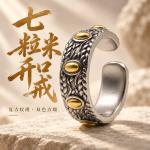
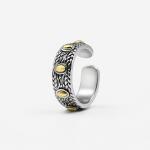
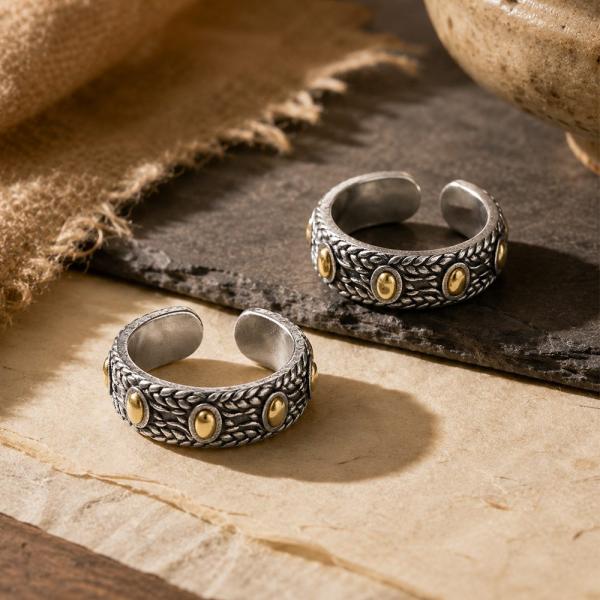
The “seven grains of rice” in the name are the seven rice-sized bumps on the ring's face. They sit in a single row, kept low, each a shallow rounded head under the finger rather than a pin that pricks. The characters are pressed in beside them, strokes thin, setting a hard edge against all that roundness. The face is not wide, so it does not look loud on the hand, and the ends are polished round; wedged between two fingers, nothing digs in. Fine seams run between the grains and dust settles there — the standing complaint with tight-packed relief. Worth knowing before you put it on.
The rice grain has a long run in folk ornament. Of the five grains, rice comes first, and ordinary households treated it as capital, one grain at a time until the measure was full. Seven on a ring carries the idea of something you can count — not an empty phrase but a thing you can tick off one by one. When a lock was made for a child, or a bangle for a bride, the rice-grain pattern was put to work, and that steadiness was the point of it. Text with grain is half design and half the customary way with small pieces: one face for shape, one for words, so you look down and read, lift your hand and feel.
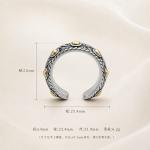
Open means the band is not sealed shut; a gap is left between the ends, and a squeeze closes or opens it. The size field says adjustable, no numbered size, so a thicker or thinner finger both fit. A finger runs nearly half a size wider in summer than in winter, and is slimmer in the morning than in the afternoon; that is the margin the opening buys you. Grip both ends with two hands and add pressure gradually, never forcing it through in one go. Copper springs back, and repeated wide bending starts fine cracks at the gap. Close it early rather than late: loose can always be tightened, but over-tightened leaves a mark, and by evening the base of the finger feels swollen.
Worn long enough, the colour drifts grey, faster in a sweaty season, which is normal for copper. To bring it back, rub with a dry soft cloth; where it has gone properly dark, put a little toothpaste on the cloth and work it in circles. Keep steel wool and blades away; sandpaper leaves scratches that will not come out. Dust in the character cuts lifts with a dry soft toothbrush worked along the strokes. Store it in its pouch rather than loose in a pocket with keys. Dry your hands after washing; water gathers inside the band and leaves a dark ring in time.
White copper is a copper-nickel alloy with a cool white tone that needs no plating to look well. It is not silver, and should not be judged by silver's standards — the price sits a good distance lower, and that is the plain truth. Nickel is in the mix: if your skin is sensitive, wear it half a day first, and if the base of the finger reddens and itches, do not push through. Move it to another finger, or brush a thin coat of clear nail polish inside. White copper is harder than pure copper, so fine character cuts hold their edges; the trade-off is brittleness, so keep pliers away from those two open ends.