


Menu
By theme
By theme


{{ variable.name }} : {{ variable.values[selectedVariantsIndex[variable_index]].name }}
Quantity:
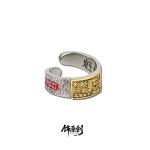
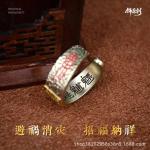
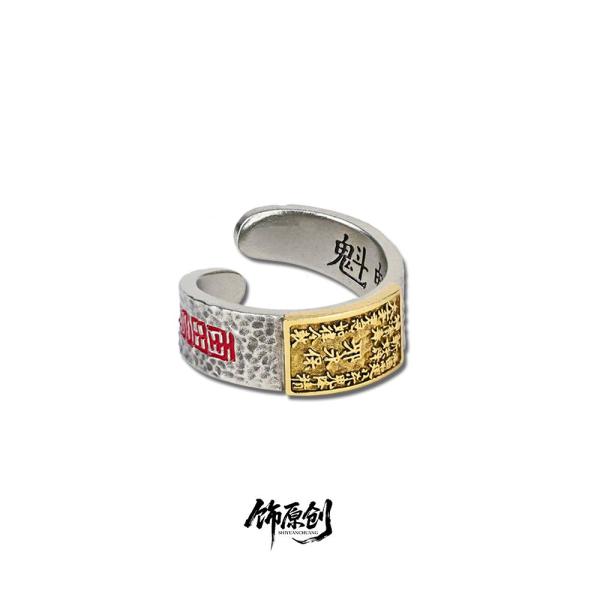
Where the hammer came down, the copper surface sank into small dimples. Dimple against dimple, the light scatters off them, and the face looks like water when the wind gets up. This is hammered texture — struck, not pressed — so no two pieces match; set two side by side and the pattern will not repeat. The rims of the dimples are not sharp. The hammer was eased off at the end of each blow and left them rounded, so a finger runs over a series of shallow hollows and nothing catches. The texture carries from the face round to the sides, continuous as you turn the ring.
“Thick silver plating” in the name is thick against ordinary electroplating. A heavier layer leaves more margin for wear, but plated it remains — it is not silver through and through, so do not treat it as a silver ring. Over time the side that rubs most against the neighbouring fingers shows the base metal first. That is the ordinary course of plated work, not a flaw, and it does not affect how the ring wears. If it would bother you, the all-white-copper version is the easier choice: the colour is a shade off, and the mind is easier. Plating's worst enemy is a hard knock, so take the ring off before shifting furniture or driving screws.
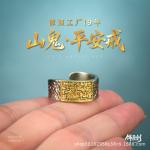
The mountain-ghost charm coin carries a spell on one face and the bagua on the other, and it is the most widely circulated of the talismanic coins. The name shares its characters with the “Mountain Ghost” section of the Nine Songs in the Songs of Chu; what Qu Yuan wrote is a hymn to a mountain spirit. Whether the mountain ghost on the coin is the same figure is argued both ways, and scholarship has settled nothing, so do not let anyone tell you the matter is closed. Older generations hung the coin from a bed-curtain hook or carried it in a pocket, wanting peace of mind; there was no rule to it. A charm coin is a talisman, not money that ever circulated.
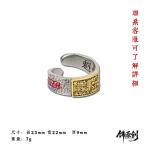
The band is open and the size adjusts. A hammered face is thicker than a plain one, so when you bend it, put the pressure on the smooth sides and keep your fingers off the textured part; the dimples are deep, the force goes uneven, and one squeeze will twist it out of true. For thick knuckles an open band clears the joint better than a closed ring: slide it on, then close it until it stops rattling. The inside is plain, with no pattern against the skin, so it does not chafe when you sweat. The cut ends have been polished and will not scratch. The hammered face is broad, and on a little finger it looks clumsy; middle or index finger is the usual choice.
Dust and sweat collect in the dimples; when white copper dulls, the bottoms go black first. Brush along the hollows with a soft toothbrush rather than across them — a crosswise scrub flattens the rims and the texture goes shallow. Plating dislikes abrasion, so do not share a pocket with coins or keys. Take it off for showers and swimming; bath products and chlorine are hard on a plated layer, and one or two times shows nothing while a year of it shows plenty. The silver tone runs cool and looks best against dark clothing; it cannot hold its own against bright reds and greens, and plain colours are the safest ground.