


Menu
By theme
By theme



{{ variable.name }} : {{ variable.values[selectedVariantsIndex[variable_index]].name }}
Quantity:
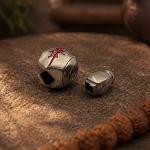
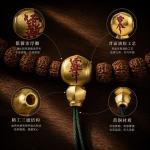
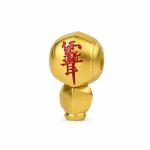
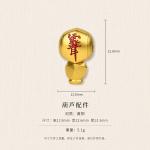
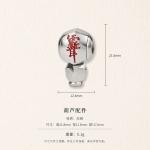
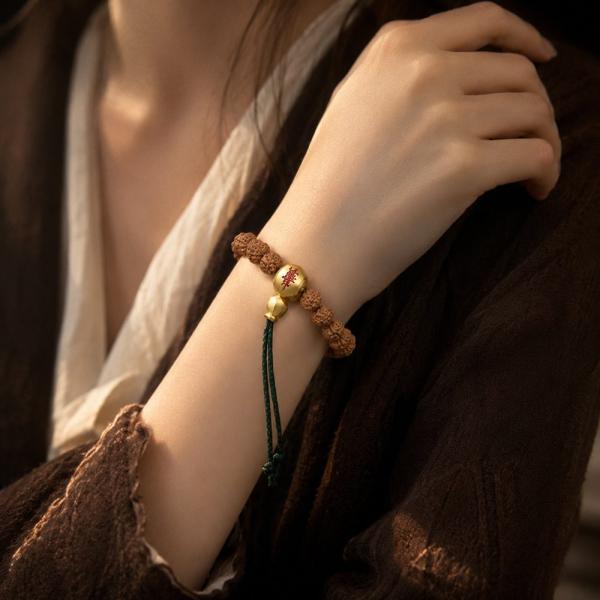
The gourd is set upright as a three-hole bead: one channel runs straight through from top to bottom, a hole opens on each side for the branch beads, and the waist is pinched in. A bead pressed onto it sits in that waist and will not slide left or right. The silver option runs cool, the gold option warm; the surface colour differs between the two and you can see it when they sit together. The two ends differ plainly in size — the lower belly swells, the upper one draws in — so once strung, small above and large below, the orientation is obvious and nobody will thread it upside down. The belly is mostly plain, so it does not compete with the main beads.
The three-hole bead, sometimes called the Buddha head, is the closing bead of a hand strand: three openings, with the main line running up through the bottom, branch beads attaching at the sides, and the top taking a stupa bead or a direct knot. What matters most is that the holes are true. Off by a little and the loop strung through it sits crooked, and no amount of adjusting makes it right. The hole mouths should be round; leave a burr and the cord will break there first. On this piece the three holes lie in one plane, so you do not have to hunt for the angle as you string. The inside of the channels is polished, the cord runs smoothly and does not fray.
A hui character is the Daoist way of gathering a deity's name into a single symbol. The Ziwei hui stands for the Great Emperor of the North Pole of Purple Tenuity in the Central Heaven, the highest seat in the Northern Dipper cult. These characters stack stroke on stroke, and it is normal not to be able to read them whole; talisman painters pass the forms down through generations and work from memory, not recognition. It is carved on a gourd partly because the gourd was already, among old objects, the shape that held medicine, and partly because fittings like this put the characters on the face that shows most. The hui form is not passed outside; it is cut as the register has it, and change one stroke and it is no longer that character.
When a new piece arrives, look at the hole mouths first. If there is a fine burr, take a length of cotton thread with a little toothpaste on it and draw it back and forth a few times and it will smooth. With elastic cord, leave a little clearance in the three-hole bead and do not string it under tension; pulled tight, the mouth grinds the cord, and when it goes it always goes at the bead beside it. On the gold one the inside of the channel is coloured too, and running cord will wear that off; it does not show, so leave it. Fittings fail at the holes more often than at the face, so keep an eye on whether the mouths are changing colour.
White copper's base tone runs greenish-white, steadiest against dark beads — rosewood, coconut shell and the like hold it down. Against pale woods it looks cold, as though the pairing had not been thought through. The gold one sets off a red cord; the silver one sets off black or deep coffee. This is experience in colour, not a rule. Use what you have. The strand is for your own wrist, and what looks right to you is what counts.