


Menu
By theme
By theme





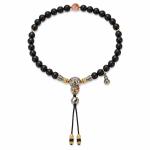
{{ variable.name }} : {{ variable.values[selectedVariantsIndex[variable_index]].name }}
Quantity:
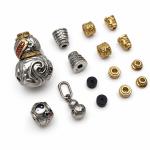
A gourd makes a natural three-hole bead because of its own structure: two round bellies with a waist between them. The narrow waist grips the main strand, and the two bellies, one to the front and one behind, give the transition without any need for extra spacers. It is rare for a shape and a function to line up so neatly, since most fittings are forced into the job. If the waist is too thin it will break through when drilled, so look at that when choosing. A slim waist has an advantage as well: the load of the cord concentrates there, so it does not slide sideways. The height of the bead should match the main beads, because one that stands too tall will dig into the wrist.
The gourd appears very early in folk pattern, with long vines and many seeds, a common auspicious subject. Plenty of fittings are made in the shape, but few as three-hole beads, because a gourd is round and a hole even slightly off centre throws the whole piece crooked. When you see one in person, lay it flat and check whether the two bellies are symmetrical, which is more use than studying the pattern. Symmetry does show in a photograph, so check it again on arrival. If the waist is pinched too abruptly, the hole is likely to chip at the edge.
Fire-bound is trade language. The wording differs from place to place, and the shop has kept the supplier's term. In practice it describes a darker surface treatment, deep in the recesses and lighter on the highs, with no noticeable raised texture under the finger. Take the name for the general idea rather than chasing its literal meaning. Trade terms are worth a nod, but judgement goes back to feel and workmanship.
The holes deserve particular attention. A three-hole bead takes three passes of cord, and if the inner walls are rough the cord will fray within months. When it arrives, pull a scrap of cord back and forth a few times; if it feels abrasive, clean the hole up with a fine abrasive strip. Brass is soft, and the hole will be enlarged by the cord over time, so go up half a size when restringing. Measure the inner diameter, because the outer diameter tells you nothing useful.
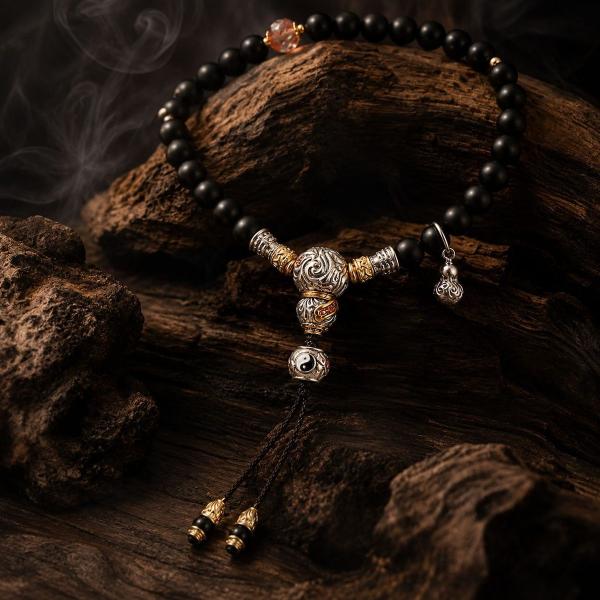
When assembling, align the waist of the gourd with the direction of the main strand and set the two bellies one above the other, so the centre of gravity is stable. Hang the pendant from the lower belly rather than the waist, where it will turn over. Keep the whole set to two colours at most: the brass is already heavy, and a third metal makes it busy. Whether the tip points up or down is a matter of habit, though up is steadier. A cord suits it better than a chain, since the form belongs with the curios tradition.