


Menu
By theme
By theme




{{ variable.name }} : {{ variable.values[selectedVariantsIndex[variable_index]].name }}
Quantity:
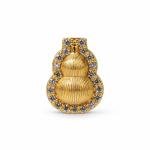
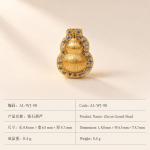
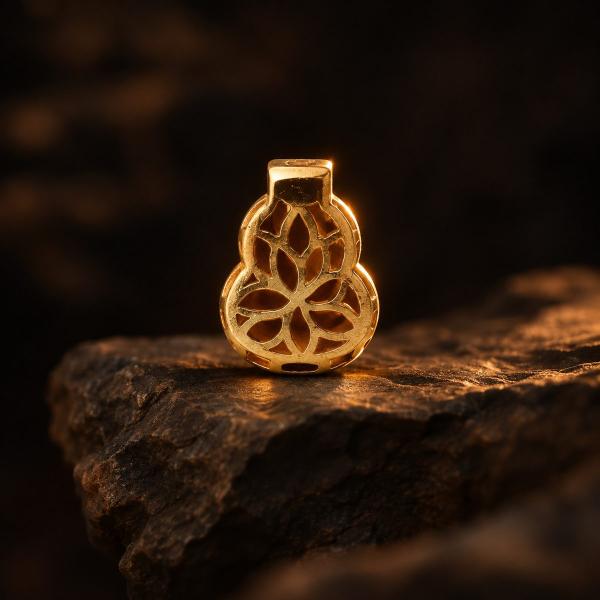
The gourd is made as a bead with a hole straight through the middle: a spacer. Vertical ribs run from top to bottom, one beside the next, cutting the curve of the gourd into segments. The ribs are not deep; under the finger they are shallow grooves. Small upper belly, large lower belly, waist drawn tight — the shape is recognisable, and on a cord it will not be mistaken for the wrong way up. The hole is centred, its mouth drawn in a little, so the cord does not scrape as it passes. The ribs are cut to one depth and the segments come out much the same width all the way round. The top narrows to a small point; mind your fingers when you thread it.
A spacer is the punctuation of a strand. It goes between two large beads, or under the Buddha head as a finish. It does not carry the weight of the main beads; it keeps the rhythm. A strand of beads all the same size looks dull, and one bead of a different shape set among them gives the eye somewhere to stop. A spacer need not be expensive, but the shape must be right and the placing exact; one bead off and the whole strand feels wrong. Its colour should sit a little apart from the main beads — too close and it looks like a mistake in the stringing.
The body is metal, and the mouths of the ribs are not sharp; a fingernail drawn across does not catch. Metal is denser than wood, so the same size feels heavier in the hand. Put it high on the strand rather than piling everything at the pendant end, where the weight pulls the whole thing forward. In colour, metal sits steadily with dark woods, overwhelms pale ones, and works with bodhi seed. The grooves of the ribs narrow toward the bottom instead of running straight down, which is usual in small pieces of this kind.
Loose fibres catch in the grooves; check after stringing, pull any out and re-thread. Oil from the hands brightens the surface in patches, which a soft cloth evens out; it does not need washing. A spacer hidden among beads is easy to lose without noticing, so knot the cord on both sides to hold it, keeping the knots small enough to sit inside the hole mouths. Metal dislikes sweat: worn against skin through a summer it dulls within a month, and one wipe with a dry cloth brings it back up.
The gourd is common as a spacer because its two ends differ, which gives the strand a natural direction. The waist is narrow, so thread it in at the large belly and out at the small one; it will also pass the other way, but then it hangs upside down. Upside down it is not ugly, it simply stops looking like a gourd. Hold the hole to the light when choosing; if it is open, that is enough, and if something blocks it, push it through with fine wire. The bore is a straight-through diameter, so a thick cord will pass; a fine cord sits loose, and a short length of leather cord behind it takes up the slack.