


Menu
By theme
By theme




{{ variable.name }} : {{ variable.values[selectedVariantsIndex[variable_index]].name }}
Quantity:
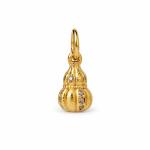
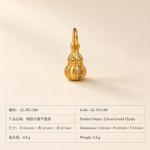
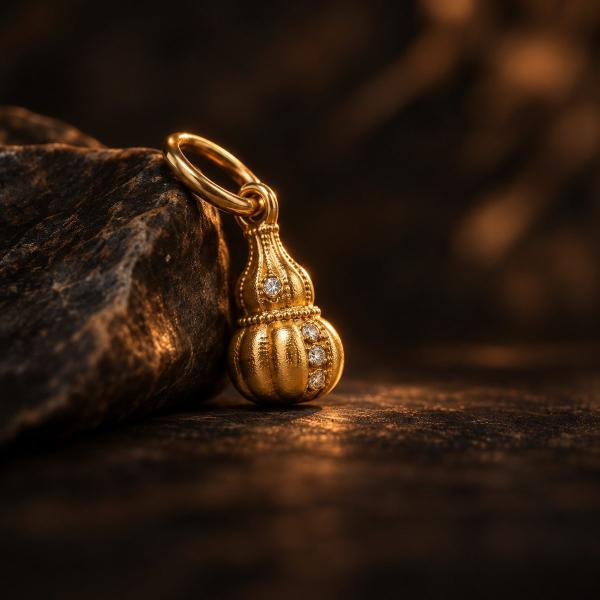
A pumpkin-segment gourd, each segment swelling, with hammer marks struck into the segments. The grooves between segments are deep and the hammer pits fall on the faces, two kinds of relief on top of each other, so the light comes off it in pieces. The waist is drawn tight and the two bellies are clearly divided; the hole at the top is small and takes a fine cord, not a thick one. The pits vary in size, struck close near the waist and sparse over the bellies, and that difference in density is what gives the swell of the gourd its rhythm.
Tiliu is a northern word for the short length that hangs under a strand and swings. A gourd tiliu usually hangs below the Buddha head, or at the tail end of a bag charm. It is freer than a spacer: it can hang alone, or be strung with a tassel and a small bell. The higher it hangs the more it swings; at the very bottom it only moves as you walk. The hole is at the top, the cord passes through and knots, and the knot turns inward where it cannot be seen. Hung alone, tie a sliding knot so the length can be changed at any time.
The segments swell and the hammer marks are shallow; the two together hold the eye better than either alone. The blows follow the segments and none are struck across, which would break the line of a segment. The bottom of each groove is left deep and the colour there is deepest, which draws the divisions between segments. Work like this costs hands; one piece takes a long time to strike, and a bad blow cannot be corrected. Hammering on a curved surface gets harder toward the edge, and the pits near the edge are usually shallower, which is characteristic of handwork. Turn it over and look at the back to judge how evenly it was struck.
The body is metal, and the colour in the grooves is deep, close to black-brown. A new piece sheds a little surface colour; two wipes with a dry cloth. Do not use wet wipes — what is in them makes the colour patchy, dark here and pale there. Unevenness is normal: handwork produces no two alike, and set two side by side and the difference shows. The metal is not thick, and a fall on a hard floor will dent it; a dent in a dark ground does not show but can be felt. Wiping off the surface colour leaves it a shade lighter, and you stop when it is light enough for you.
The weight of a tiliu gathers at the bottom, so it hangs plumb. Use a fine cord; a thick one weighs down the life in it. It can hang on a bag or in a car. The gourd says fortune and salary, and hung where it shows, it is there so that seeing it brings the thought to mind. Leave a little slack where the cord knots; too tight and the tiliu cannot swing. After a while the raised parts of the hammering are polished by the hand while the grooves stay black, and the light and dark together look better than new.