


Menu
By theme
By theme




{{ variable.name }} : {{ variable.values[selectedVariantsIndex[variable_index]].name }}
Quantity:
The character ji is already there in oracle bone script: a shi above, a kou below. The old commentators read it various ways, and the common one is that weapons were put away and fighting stopped, which is what makes it auspicious. Whether that is right is still argued among philologists; it is good conversation, but do not take it as settled and get into an argument over it. On folk objects the character was used loosely, and a homophone would do; there was no need to follow the philological route. On old pieces ji is often written with straight strokes, horizontals level and verticals plumb, with no joins.
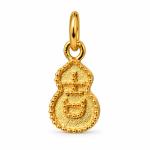
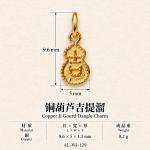
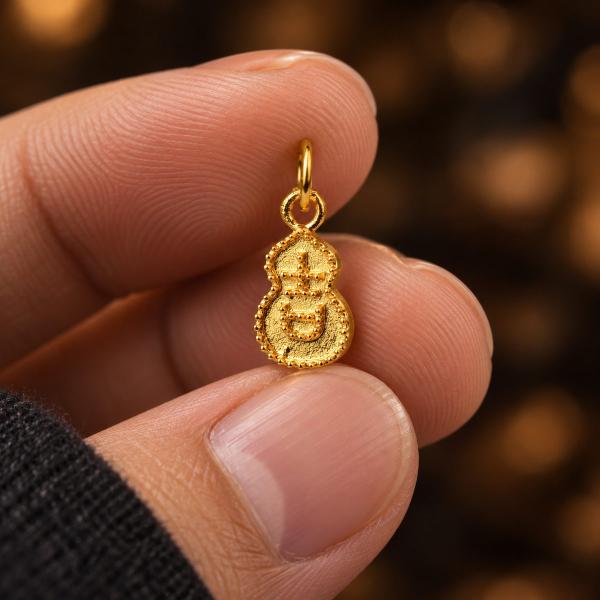
A single ji is pressed onto the belly of the gourd. The character is raised, the strokes thick, and it takes up more than half the face of the belly. The upper belly is left blank and the lower carries the character, so the weight sits low and it does not hang top-heavy. The waist is drawn fine and left bare, with no pattern on it, and the contrast between thick and thin comes down to that one waist. The two ends of the gourd are not true circles but slightly flattened, with thickness seen from the side rather than a thin sheet. The two bellies are close in proportion, with the waist a little above the middle.
The tiliu hangs below. The gourd says fortune and salary, the character says auspicious, and the two together read as good fortune and prosperity. Pieces like this do not stand on composition; what matters is that it comes out smoothly and looks festive. It can hang anywhere: on a bag, in a car, behind a door, there so that a glance up meets a character. Where it hangs decides how often you see it; on the back of a door, two or three times a day. The advantage of a small piece is that it goes anywhere and takes no room in a pocket.
Metal body, with the character and the gourd in one piece: run a hand over it and there is no seam, so it is not an applied plate. The edges of the character are rounded and do not cut, and the height of the relief matches the curve of the gourd. The colour is deep in the cuts and bright on the raised parts, so light lifts the character out. The piece is not thick; from the side it is a narrow edge. The tone is not one value throughout: deep in the cuts, bright left on the swell of the gourd, and the boundary should be clear. Metal is cold, cold at first against the skin and warm a moment later.
The waist is the thinnest part, and the hanging cord passes through the hole at the top, where the mouth of the hole frays the cord. Before use, run fine abrasive paper round the mouth, or put a short length of leather cord behind it. Wipe dull metal with a dry cloth, and brush dust out of the character's cuts with a toothbrush, not a needle. In a car in summer it gets hot in the sun, so use a cloth to take it down. A cord worn through at the hole should be replaced; cord is cheaper than the piece, and do not wear the hole large to save a length of cord. Where it has gone quite dark, work a little toothpaste in circles with a cloth, rinse and dry.