


Menu
By theme
By theme




{{ variable.name }} : {{ variable.values[selectedVariantsIndex[variable_index]].name }}
Quantity:
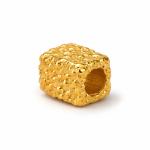
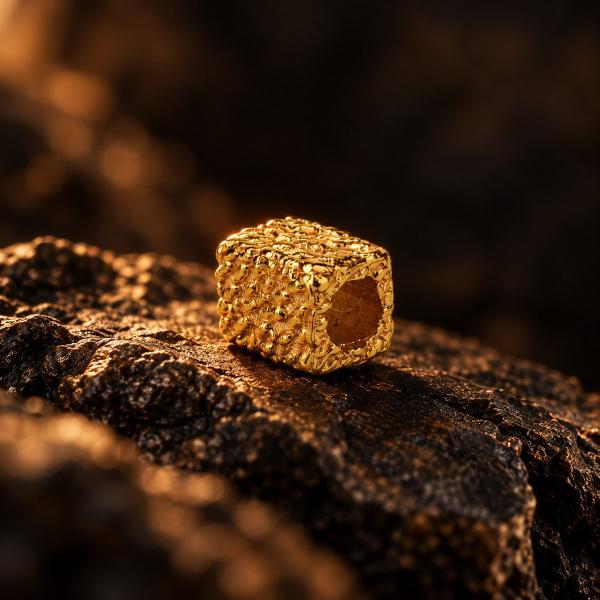
Those pits across a meteorite’s surface have a name: regmaglypts. As the stone comes through the atmosphere the surface ablates and hollows out in patches, and the rims stay wrapped in fusion crust. The people who make fittings have moved that texture onto metal, the pits set down with no order to them and yet smooth under a finger, because a real regmaglypt has a round bottom and not a point. Whether a copy reads right comes down to whether the pit bottoms are round. Real meteorites rust once they have lain on the ground a while, iron-nickel ones quickly; a metal copy has none of that trouble.
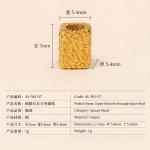
The rectangular spacer exists to hold two main beads apart. A bar gives more contact surface than a round bead, so the beads stop knocking, and the line of the strand runs straight. The hole goes through the middle of the long edge, which means the piece will not rotate on the cord; it stays where you put it. Chamfer the mouths of the hole or the cord wears thin where it bends. A hole too small makes doubled cord a fight, a hole too large lets the bead wobble — compare it against your own cord before you choose. The long edge has to run along the strand. Turn it crosswise and it digs into the wrist.
Texture on metal comes out of the mould. The pits need to vary in depth by stages; all one depth reads as machine-stamped. Leave the pit bottoms a little rough so the light scatters, and the surface starts to look like stone. A dark finish ages best and does not show fingerprints; a bright one is handsome until a single scratch goes white. Dark finishes differ too. A good one still lets a little metal light up through it, a poor one is dead grey. Moulds wear, the edges of the pits round over, and a later batch loses the alertness of the first.
How many spacers to use follows the size of the beads. Big main beads, one is enough; small ones, and two look scattered. On colour, the cool grey of the metal sits well with dark wood and fruit-pit beads, and competes with vivid stone. A slim wrist should carry fewer fittings — every extra piece adds hardness. Slip a disc between wood and metal and the oil in the wood will not transfer, and the strand comes apart clean. The edges of the metal want dulling, too; a sharp corner will cut the cord through.
This kind of piece carries no meaning, so talk about the work. If a customer asks whether it is meteorite, say no and say it plainly: metal, with a copied texture. Being clear about it sells better than hedging. Store it in its own small bag rather than heaped in with other metal, where the corners knock and the pits smooth first. Grime that collects in the seams comes off with two dry passes of an old toothbrush; do not oil it. And no more than three metal pieces on one strand, or the whole thing starts to look like a hardware shop.